
In “Memory and Transitional Justice: Remembering the Armed Conflict as Struggle and as Harm”, Professor Farid Samir Benavides Vanegas explores the complex role of memory in Colombia’s transitional justice process following the 2016 peace agreement with the FARC-EP. The article critically examines the tension between competing narratives of the conflict—particularly the often-overlooked perspectives of former combatants—and questions the assumption of a single, unified memory. By analyzing the concept of memoria fariana, or the guerrilla’s memory, the author sheds light on how ex-combatants are contributing to the collective remembrance of both political struggle and inflicted harm, and how these efforts relate to broader goals of reconciliation and non-repetition.
Available in Spanish, the paper is part of the project “Strengthening and consolidating the processes of reintegration, reconciliation and building peace in the north-west of Colombia”, carried out in consortium by Catalan Association for Peace in partnership with Fundació Món-3, in collaboration University of Barcelona, the University of Antioquia, Alterpaz and the European Observatory of Memories (EUROM) of the UB Solidarity Foundation.
Download the paper here
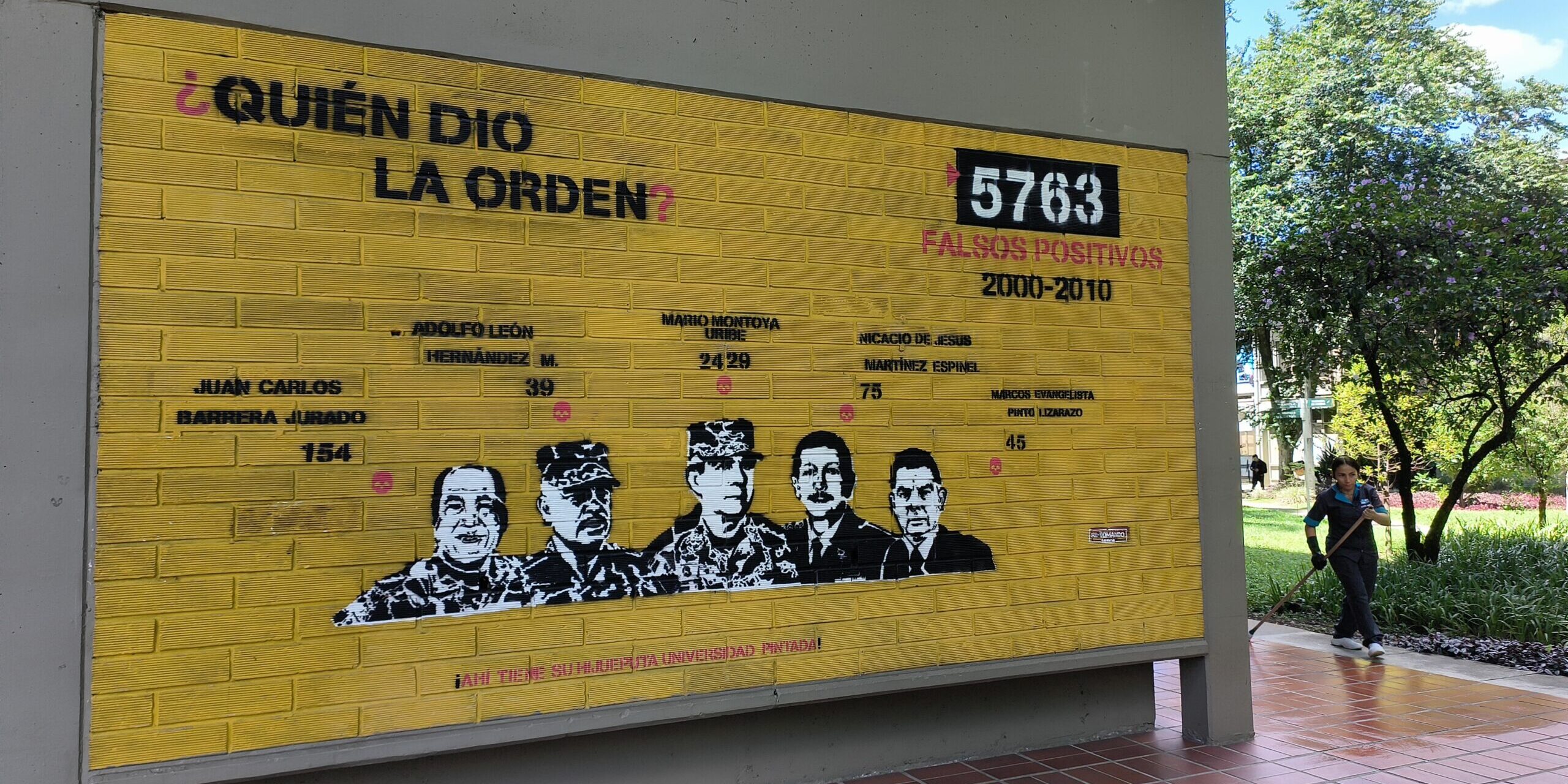
Cover picture: “¿Quién dio la orden?” (Who gave the order?) — This mural captured at the University of Antioquia in 2023, denounces extrajudicial executions known as falsos positivos in Colombia. The original mural was censored and erased by the National Army’s 13th Brigade on October 18, 2019. Created by the Campaign for the Truth, it features the faces of five generals and the number of victims linked to the battalions they commanded (2000–2010), based on data from pbicolombiablog.org. Despite the military’s attempt to silence it, the mural sparked widespread replicas in streets and social media, becoming a powerful symbol of resistance, truth, and historical memory.