
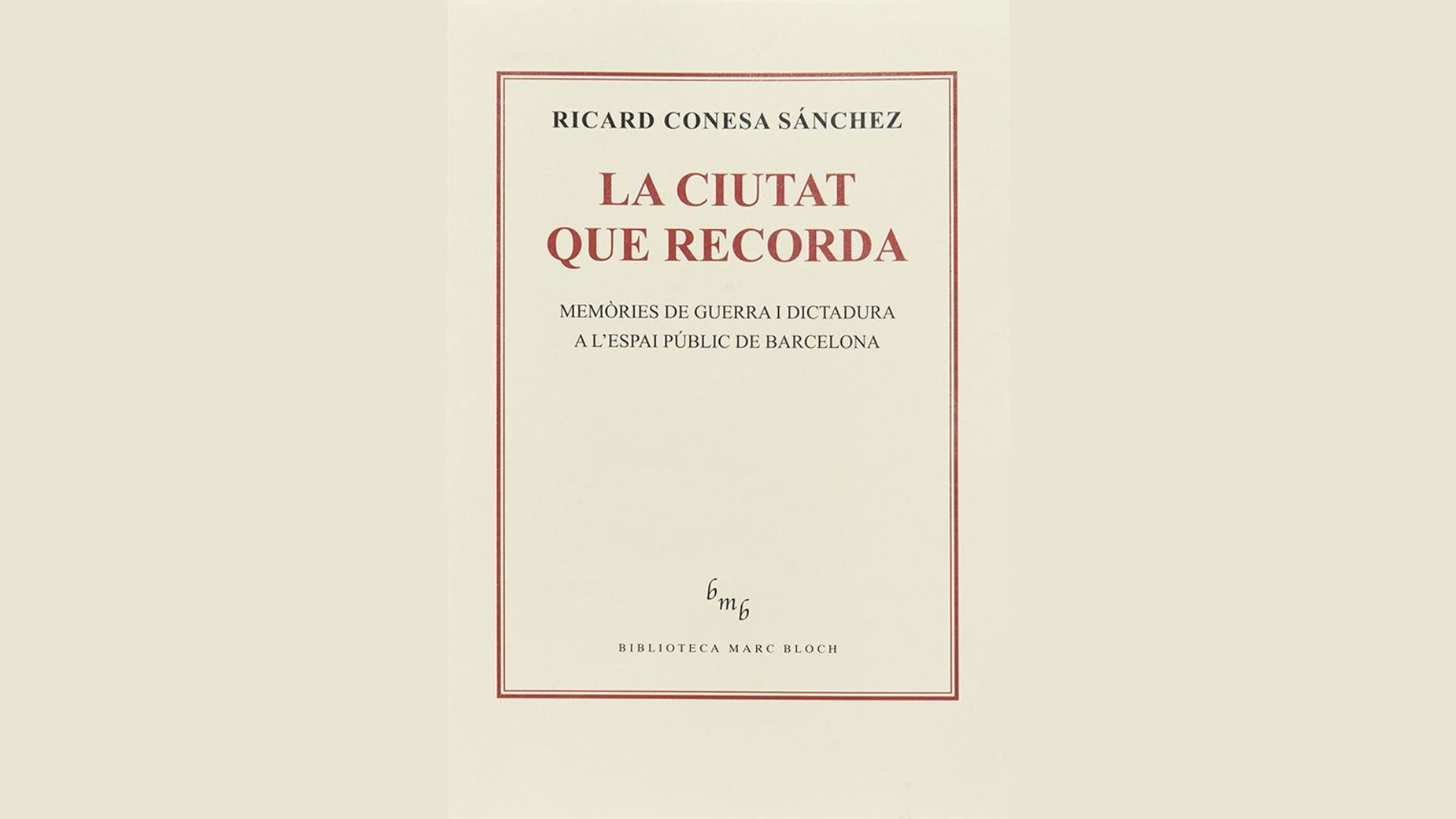
How does a city negotiate the ghosts of its past? Published by Icaria Editorial and the City Council of Barcelona in collaboration with the European Observatory on Memories (EUROM), La ciutat que recorda: Memòries de guerra i dictadura a l’espai públic de Barcelona offers a profound exploration of Barcelona’s landscape as a living archive of conflict and resistance.
About the Book
Authored by historian Ricard Conesa Sánchez, this work traces the social history of memory sites linked to the Spanish Civil War and the anti-fascist struggle. Spanning from the end of the Franco dictatorship to the beginning of the 21st century, the book examines how the urban fabric has become a primary stage for symbolic disputes.
Rather than viewing monuments and commemorative markers as static objects, Conesa Sánchez approaches them as contested arenas. The study highlights the tension between institutional narratives and grassroots social movements, documenting the transition from the persistence of Francoist iconography to the emergence of modern memorialist movements.
Key themes explored include:
-
The evolution of commemorations and territorial markers in Barcelona.
-
The conflict between official history, collective memory, and political power.
-
The resignification and resistance surrounding physical sites of trauma.
Bibliographic Details
-
Title: La ciutat que recorda. Memòries de guerra i dictadura a l’espai públic de Barcelona
-
Author: Ricard Conesa Sánchez
-
Publisher: Icaria Editorial
-
ISBN: 978-84-10328-41-9
-
Format: 398 pages | 2025
About the Author
Ricard Conesa Sánchez is a Doctor of Contemporary History (University of Barcelona) and a Juan de la Cierva post-doctoral researcher at UNED. With a career spanning roles at the Memorial Democràtic and the European Observatory on Memories (EUROM), he is a leading voice in the study of memory laws and public policies. He is also the editor of the journal Observing Memories.