
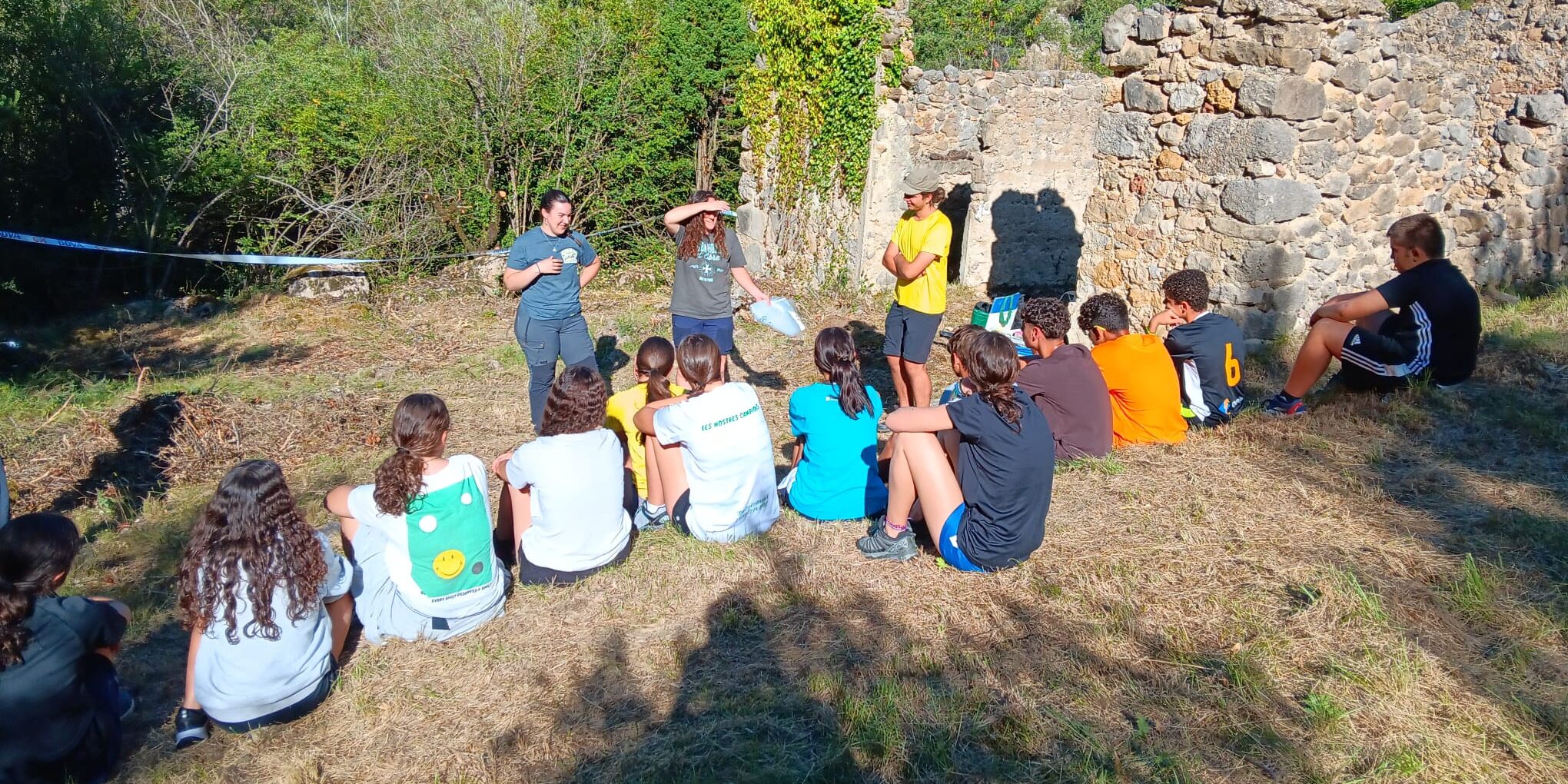
The second edition of the conference will take place on 23 and 24 October under the title ” Roads of Memory. Rebuilding a Country as a Sentence”. The two-day event will include a guided visit to the archaeological remains of the Cal Negre barracks, linked to forced labour on the L-401 road in Catalonia.
Forced labour as an instrument of repression under Francoism, the construction and reconstruction of infrastructure by prisoners, and the recovery of the memory of those who experienced it will be at the centre of the II Conference on Forced Labour under Francoism, taking place on 23 and 24 October at the Sala Francesca de Llobera, at the Solsonès County Council.
Held under the title “Roads of Memory. Rebuilding a Country as a Sentence”, the conference follows on from the first edition, held in 2024, and explores the history of forced labour under the dictatorship through new case studies and lines of research. Historians, archaeologists and researchers will examine the organisation of labour battalions and penal detachments, prisoners’ living conditions, and the role they played in the construction and reconstruction of infrastructure across Spain.
The programme will also focus on the material and documentary heritage associated with forced labour, the tools available to document it, and initiatives aimed at recovering and preserving the memory of those who experienced it. The conference will also include a specific focus on younger generations, with presentations of projects related to the labour camps of Navarra and the Solsonès region.
The Solsonès: a site of research
The Solsonès region will have a particularly prominent role throughout the conference. Research into the L-401 road sheds new light on the history of forced labour in the area while connecting it to a wider system of repression implemented across Francoist Spain.
On Saturday 24 October, historian Nil Boix and archaeologist Aila Pinyol will present their research on the L-401 road. Participants will then have the opportunity to explore the material traces of this past through a guided visit to the excavation of the Cal Negre barracks, led by the same researchers.
The visit will provide an opportunity to explore the archaeological heritage associated with forced labour and to understand how research into the territory can help recover a part of history that remained largely invisible for decades.
A programme bringing together researchers from different territories
The conference will open on Friday 23 October at 12 noon with a welcome and opening session featuring M. Claustre Sunyer, President of the Solsonès County Council; Neus Mujal, President of the Centre d’Estudis Lacetans; Jordi Guixé, Director of the European Observatory on Memories (EUROM); César Layana Ilundáin, Director of the Instituto Navarro de la Memoria; Jordi Font, Director of the Memorial Democràtic; and Ramon Espadaler, Minister for Justice and Democratic Quality of the Government of Catalonia.
The programme will include presentations on labour battalions in Catalonia, with case studies on the excavations at Empúries and Torres de Segre; research into forced labour on the northern shore of the Strait of Gibraltar; the presentation of the national database of Labour Battalions; and a session focusing on young people and memory.
Friday’s programme will conclude at 7:30 pm with a screening of La Muralla de los Prisioneros, directed by José Luis Tirado, followed by a discussion moderated by historian José Manuel Algarbani.
On Saturday 24 October, the conference will continue with a presentation on the penal detachment of Bustarviejo and a session on the archaeology of memory, including research on Cuelgamuros and the L-401 road and the Solsonès region. At 12 noon, participants will visit the excavation of the Cal Negre barracks.
The conference is organised by the European Observatory on Memories (EUROM) of the University of Barcelona Solidarity Foundation, the Memorial Democràtic, the Solsonès County Council, and the Centre d’Estudis Lacetans (CEL), with the support of the Institut d’Estudis Ilerdencs (IEI) and the Diputació de Lleida.