
The fifth edition of EUROM’s annual Subaltern Memories conference will focus on voices too often forgotten in the memory of environmental and natural disasters. Organised in collaboration with the European University Institute (EUI), the event will take place in Florence on 16 April 2026.
As the consequences of climate change become increasingly visible—often through devastating and deadly disasters—the conference aims to highlight the experiences of communities affected by past environmental catastrophes and the memory initiatives that have long remained overlooked in public discourse.
Marking the 40th anniversary of the Chernobyl nuclear disaster, the programme will examine its lasting human, social, and environmental impact, as well as the struggles of affected communities for recognition and remembrance. Additional panels will address major natural disasters in Italy and explore wider transnational perspectives, including the environmental consequences of armed conflicts such as the Spanish Civil War and the ongoing war between Russia and Ukraine.
Through these discussions, Subaltern Memories will critically explore how environmental suffering has been remembered—or neglected—in Europe, bringing subaltern experiences to the fore and challenging dominant narratives of progress, responsibility, and resilience.
Participation
The conference will take place both in person and online via Zoom. Free registration is now available throughout this link.
Participants attending in person will also have the opportunity to visit the Historical Archives of the European Union, with special attention to original documents related to the conference themes.

Programme
Download the PDF version here.
Morning session: 9,00 am – 1,00 pm
9,00 am Arrival and registration
9,30 Opening remarks by the organizers
Panel 1: War and environmental consequences, moderated by Oriol López (EUROM)
- Whose environment? Perspectives on environmental history and historiography in Europe and beyond, by Corinna Unger
- Weaponising water in the Spanish Civil War: An Environmental History, by Santiago Gorostiza
- Submerging and Surfacing: Nova Kakhovka in Ukrainian Contemporary Art, by Polina Baitsym
Visit to the EU archives with special attention to original documents related to the conference topic
Afternoon session: 2,30 pm – 4,30 pm
Panel 2: Environmental impacts of technological disasters in Italy: memory and recognition, moderated by Fernanda Zanuzzi (EUROM)
- The Vajont Dam disaster in 1963, by Chiara Calzana
- The Seveso disaster in 1976, by Monika Baar
Keynote: A Beacon of Hope, a Catastrophe, a Landscape Scar. Chernobyl’s (In-)visible Impact, by Achim Klüppelberg
Presented by Monika Baar.
Meet the speakers
Achim Klüppelberg is a historian of energy systems and their implications on life, focused on Eastern Europe and the former USSR. He studies energy transitions and the so-called “technocratic culture”, with an emphasis on sustainability and decision-making processes related to energy policy and infrastructure development.
Chiara Calzana holds a PhD in Cultural and Social Anthropology from the University of Milano-Bicocca. She researches historical anthropology and memory studies, focusing on disaster memory and contemporary legacies of fascism in Europe.
Corinna Unger is Professor of Global and Colonial History at the European University Institute in Florence. Her research focuses on decolonization, development, pesticide regulation, and the history of forest use.
Polina Baitsym is an art historian and curator specializing in Ukrainian Soviet visual arts. She has co-authored books on Ukrainian Soviet mosaics and recently co-curated exhibitions on socialist design. She is currently working on a manuscript on Ukrainian Soviet art historiography.
Monika Baar is Professor of East-Central and South-Eastern European History at the EUI. Her earlier research focused on historiography, nationalism, political thought and the challenges faced by small cultures. Currently, she is studying the history of disability movements in Europe.
Jacopo Cellini is a Research Fellow at the Historical Archives of the European Union. His work focuses on European integration, political groups in the European Parliament, and the historical development of environmental policy in Europe.
Santiago Gorostiza is an environmental historian at Lund University (Sweden) studying war, environmental destruction, and socio-ecological change. Most of his research has focused on twentieth-century Spain.
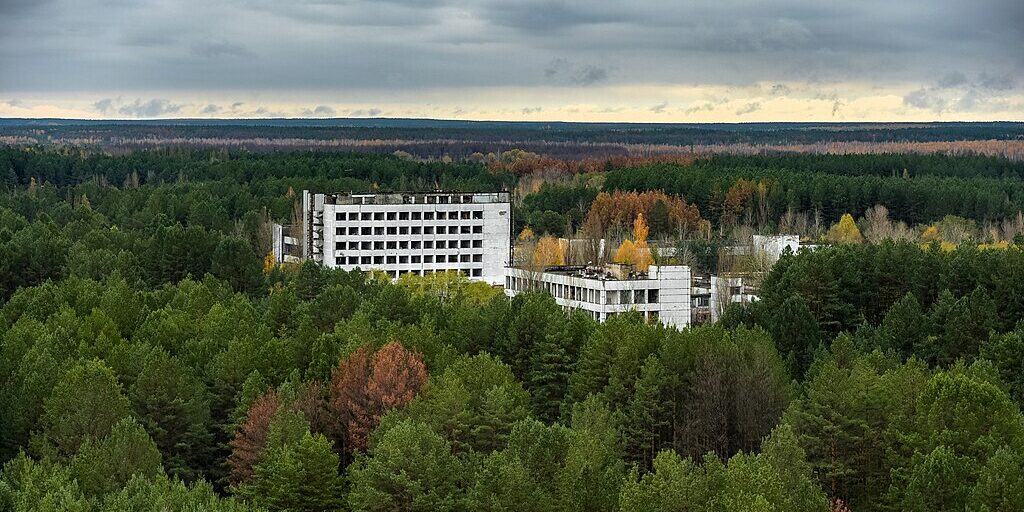
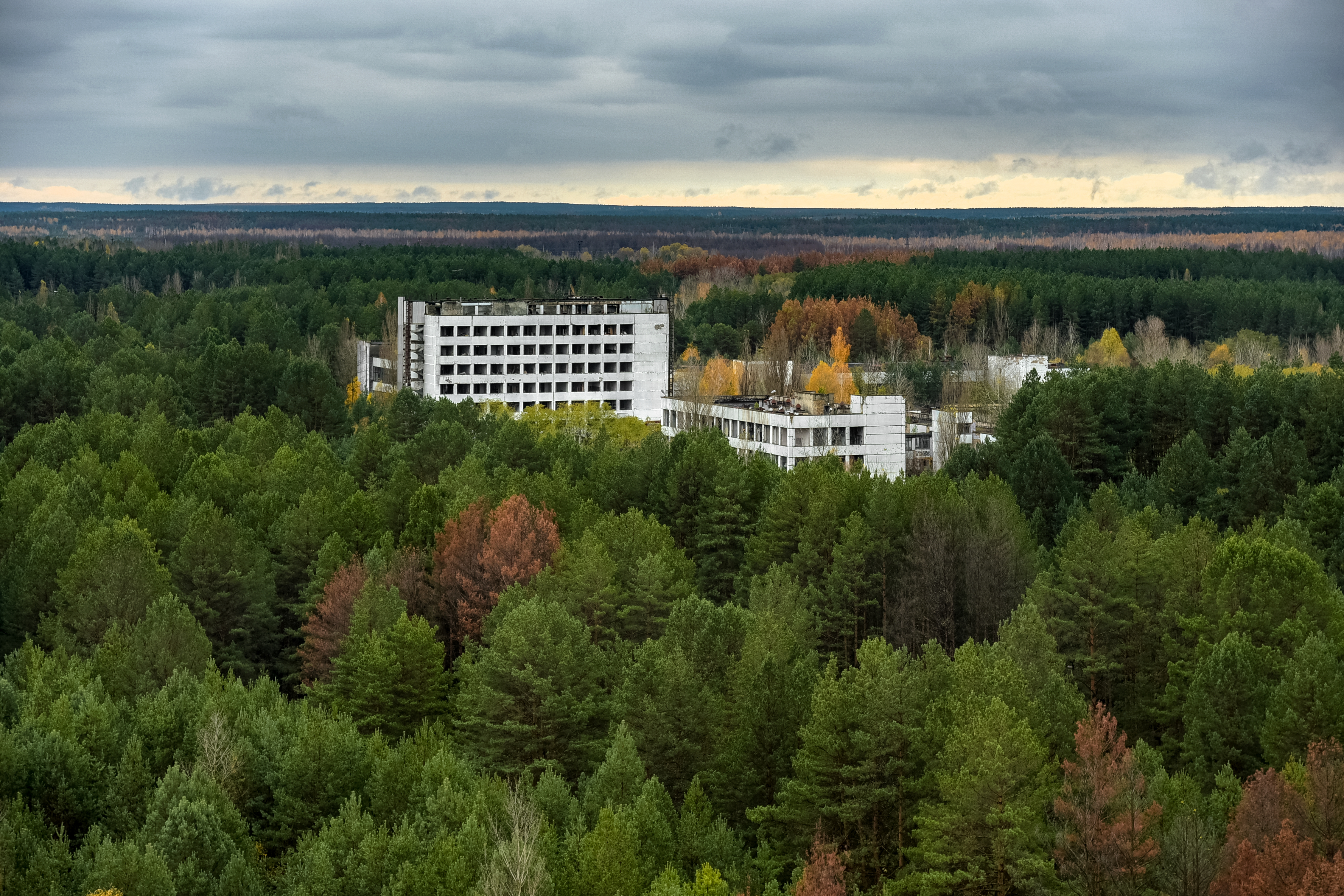
Cover picture: Red Forest visible in the background, behind the buildings. Pripyat (Ukraine). November 4, 2017. Poster picture: Pripyat, Ukraine. November 4, 2017. Both images are part of the photo exhibit Chernobyl: the legacy of a disaster. Author: Jorge Franganillo, CC BY 2.0
Related press
- Subaltern Memories Conference Explores the Legacy of Environmental and Natural Disasters in Europe
- Environmental Catastrophes and Collective Memory at the Heart of Subaltern Memories 2026
Survey
This activity is co-financed by the European Commission and for its evaluation we kindly ask your collaboration in filling out this survey. You will need the information indicated below. Thank you very much!
- Reference of the Project: 101236354
- Type of activity: Mutual-Learning
- Title: Subaltern Memories 2026
- Date: April 16, 2026
- Hybrid event