
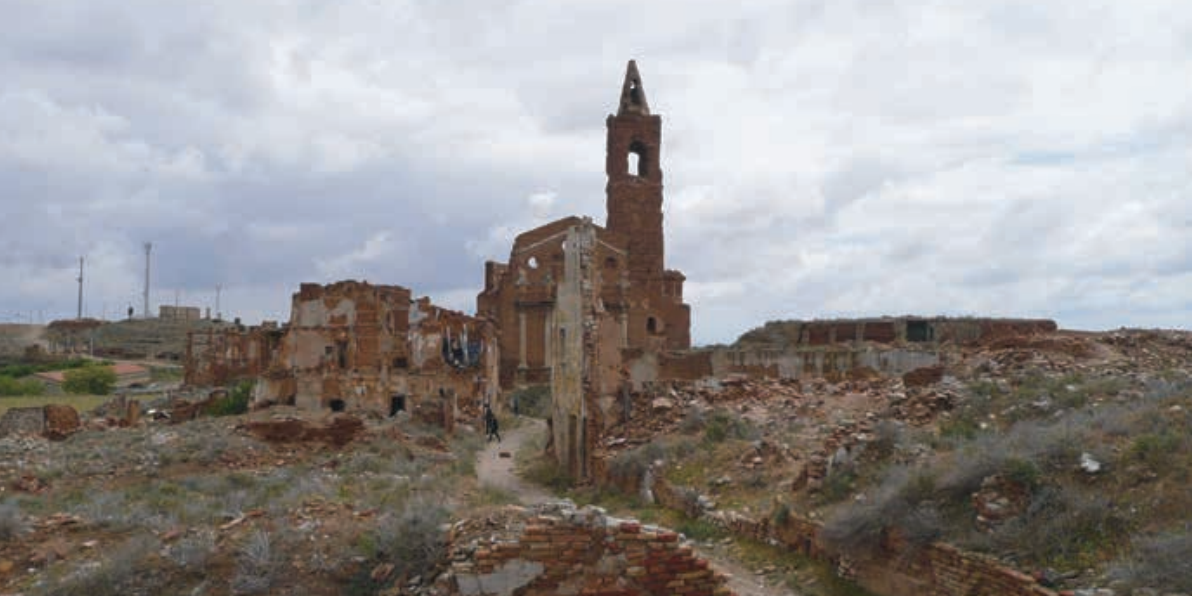
In 2026, ninety years after the outbreak of the Spanish Civil War, the legacies of the conflict and the Francoist dictatorship continue to shape how we understand democracy, rights, and collective memory. Despite the time that has elapsed, unresolved wounds, silences, and fragmented narratives still resonate in our society, challenging the ways in which we have confronted—or avoided confronting—the past.
(Dis)Memory as a Symptom is a four-session seminar designed to examine how public memory of the war and dictatorship has been constructed, transmitted, and contested. Organized by L’H Espai de Debat and the European Observatory on Memories (EUROM) at the Fundació Solidaritat UB, in collaboration with the Ateneu Memòria Popular, the course brings together leading specialists to explore memory policies, the pedagogical uses of memorial sites, the role of women in the conflict, and the ongoing work of grassroots organizations committed to democratic memory.
The sessions will be held from 6 pm to 8 pm at L’H Espai de Debat.
Attendance is free and equivalent to 1 ECTS credit at the University of Barcelona. No registration is required.

Programme
April 7, 2026
The War, the Dictatorship, and Memory Policies
This introductory session traces the evolving public memory of the Civil War and Francoist dictatorship, examining the narratives, actors, and political disputes that have shaped how society interprets the past. It also reviews the development of public policies on memory and their impact today.
Ricard Conesa Sánchez, PhD in History (UB), is a project specialist at EUROM. His research focuses on memory sites, memorialist movements, and public memory policies.
April 9, 2026
Memory Spaces: Heritage for Education in Democracy and Human Rights
Through examples from Catalonia, Spain, and beyond, this session explores how museums, memorials, and historical itineraries foster critical thinking, democratic values, and human rights education. Participants will engage in dialogue about the potential of memory spaces as tools for civic engagement.
David González Vázquez is a project specialist at EUROM, coordinating educational and international programmes since 2018. He holds a PhD in Education (UB) and has extensive experience in heritage education and memory pedagogy.
April 14, 2026
Woman, You Are the Fire That Never Goes Out
This session highlights the transformative role of the 1936 Revolution in women’s political and social participation. Through primary sources—photographs, documents, propaganda posters—and recent scholarship, attendees will rediscover four women whose revolutionary commitments and later exile shaped their lives, yet were long silenced in historical narratives.
Anna Pastor is a historian specialising in historical memory and the libertarian legacy in Spain. She has worked with the Anselmo Lorenzo Foundation and the Memorial Democràtic, contributing to the Map of Mass Graves of Catalonia.
April 16, 2026
Memorialist Organizations: Resistance Against Antidemocratic Threats
This session examines the essential role of memorialist organizations in defending democracy today. Presenting the work of the Ateneu Memòria Popular, the speakers explore memory as an act of civic resistance—anchoring the past in order to confront present challenges and build future memory.
Mercè Garcés Fernández is a teacher, trade unionist, and feminist, and vice president of the Ateneu Memòria Popular.
Rosa Sans Amenós is a historian, trade unionist, feminist, and board member of the Ateneu.
Cover picture: Preserved ruins of Belchite, Spain | EUROM