
The Second International Conference on the Heritage of Conflict, titled “Spaces of Repression and Detention”, aims to foster reflection on the history and memory associated with heritage sites such as prisons, concentration camps, internment centers, and other spaces linked to repression and the denial of freedom. These sites, often marked by the institutional violence of authoritarian regimes and the systematic violation of fundamental rights, stand as material witnesses to a past that must be acknowledged and understood.
The study and commemoration of these spaces also make it possible to recover the memory of the forced exile experienced by thousands of people as a direct consequence of political repression, recognizing their legacy as an essential part of the country’s cultural heritage and democratic memory. This reflection holds particular significance in territories such as Figueres and the Empordà—key settings of the Republican retreat and exile—where spaces still exist that bear witness to a memory long silenced.
The conference will take place on November 28 and 29, 2025, at the Sant Ferran Castle and the Capuchin Auditorium in Figueres. It has been organized by the EUROM, the Association Amics del Castell de Sant Ferran and the City Council of Figueres.

Programme
The Catalan version of the programme can be downloaded here.
Friday, 28 November – Sant Ferran Castle
11:30 am – Welcome and registration
12:00 pm – Opening remarks
- Mariona Seguranyes, Councilor for Culture of Figueres City Council
- Jordi Guixé, Director of the European Observatory of Memories (EUROM), University of Barcelona Solidarity Foundation
- Joan Carné – President of the Association of Friends of the Sant Ferran Castle (AACSF)
12:30 pm – Opening Lecture
Presented by Pere Maluquer (AACSF)
- Carme Huerta Martín (AACSF)
The Old Prison of Sant Ferran Castle: From Closure to Dissemination
1:00 pm – Guided tour of Sant Ferran Castle
2:00 pm – Lunch break
3:30 pm – International Lecture
Presented by David González (EUROM)
- Aida Rechena (MNRL – Peniche Fortress)
Museo Nacional Resistencia y Libertad: ¿Cómo lo hicimos?
4:30 pm – Panel: Heritage Projects in the Spaces of Repression in Barcelona
Presented and moderated by Jordi Guixé (EUROM)
- Montjuïc Castle: Explaining the Scenarios of a Repressive Memory
Ricard Conesa Sánchez (UNED – EUROM) -
La Model: Heritage, Memory and Museography of a Space of Repression
Núria Ricart Ulldemolins (UB)
5:45 pm – Coffee break
6:15 pm – Presentation of Papers
Francoist Repression: Reconstructing Memory from Spaces of Confinement
Presented and moderated by Carme Huerta (AACSF)
-
The Fort of San Cristóbal: Captivity and Resistance
César Layana and José Miguel Gastón -
The Women’s Prison of Ventas: A Place of Pending Memory
Fernando Hernández Holgado -
Past, Present and Future of the Bustarviejo Penal Detachment (Madrid)
Sergio Riesco Roche -
The Reconstruction of Torres de Segre: Works of the Convict Workers’ Detachment
Pilar Pelegrí Terrado
7:45 pm – Closing of the first day
Saturday, 29 November – Auditorium of the Capuchins
10:00 am – Presentation of Papers
The Republican Exile Camps: History and Memory
Presented and moderated by Miquel Serrano Jiménez (Exile Memorial Museum – MUME)
-
Republican Repression and Exile in Béarn: History, Memory and Perspectives of the French Concentration Camp of Gurs — Marie Pépicq
-
The Concentration Camps of Puigcerdà and Alta Cerdanya and the Beginning of a Long Journey of Reclusion — Marc Pont Fitó
-
“Pardon, je vous demande pardon”: Agde, the Camp of the Catalans, in 2025 — Laia Arañó Vega
-
Building Bridges Through Heritage: Co-Creating Cultural Visits with the Ukrainian Community to the Exile Memorial Museum and the Beach of Argelès — Laia Encinar-Prat, Marta Salvador-Almela and Núria Guitart-Casalderrey
11:30 am – Coffee break
12:00 pm – Presentation of Communications
Territories of Repression: Memory and Local Heritage
Presented and moderated by Laia Arañó Vega (Carles Pi i Sunyer Foundation)
-
Spaces of Memory of Republican Repression in the Rearguard during the Retreat: The Examples of Sant Miquel de Campmajor, Pont de Molins, La Tallada and Vila-sacra — Miquel Aguirre Oliveras and Miquel Serrano Jiménez
-
The Retreat: Paths with an Uncertain Destiny — Clara Rofes Enjuanes
-
Forced Labour and Captives Resident and/or Born in the Berguedà Region (Barcelona), 1937–1945 — Ignacio Hierro Grandoso
-
Symbolic and Material Repression in Cal Macià – Casa Vallmanya (Alcarràs, el Segrià) — David Sancho Cepero
1:30 pm – Lunch break
3:00 pm – Presentation of Papers
Memory and Heritage: Comparative and Pedagogical Perspectives
Presented and moderated by Miquel Aguirre i Oliveres (Exile Memorial Museum – MUME)
-
Marks and Materialities of Memory: Ethnographic Reflections on the “Provincial Archive of Memory” Site in Córdoba, Argentina — Lucía Ríos
-
The Patrimonialization of Ex-Prisons as Places of Memory: A Comparative Approach to the Cases of Chile and Spain — Alejandra Canals and Javiera Bustamante
-
Rethinking the Memory of Spaces of Repression and Its Pedagogical Projection: The Contribution of “Generacions TOP” — Gerard Rodríguez Arellano and Carlota Vidal Sánchez
-
Drawing in the Midst of Confinement: Graphic Memory in Spaces of Repression during the Civil War and the Post-War Period — Taxio Ardanaz
4:30 pm – Presentation of the pedagogical projects of the Alt Empordà Working Group “Exile, Deportation and the Holocaust”
5:30 pm – Closing remarks
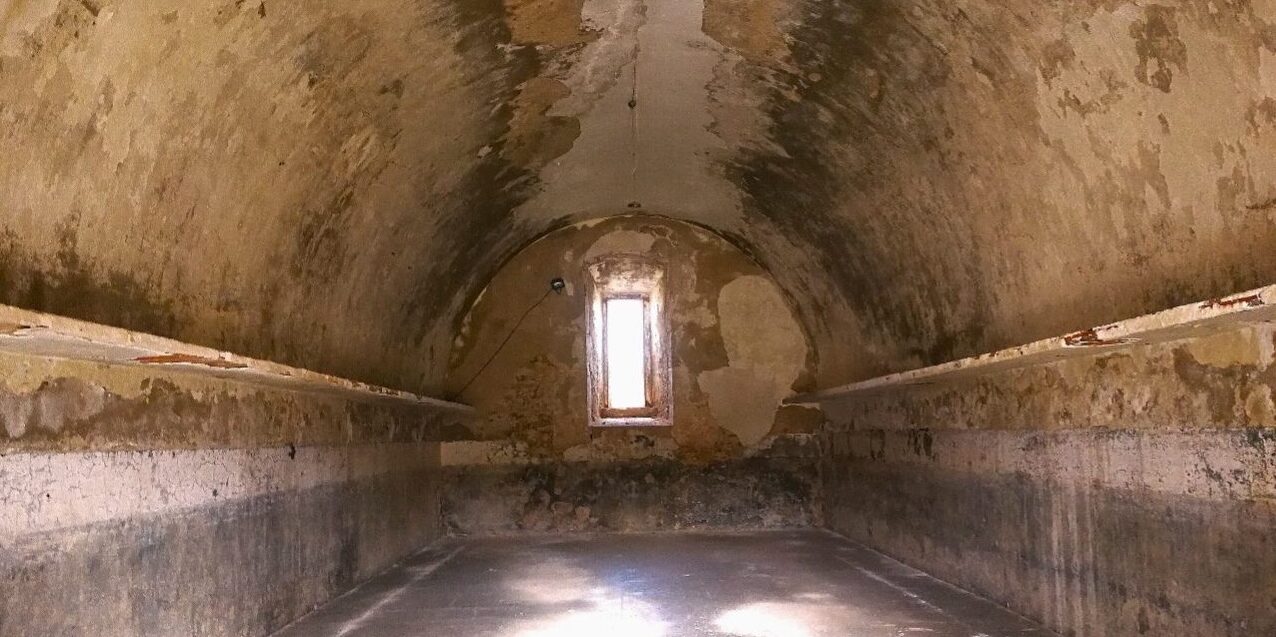
Cover picture: Carme Huerta. Penal cell of the Sant Ferran Castle, Figueres. Built in the 18th century as Europe’s largest bastioned fortress, the Castell de Sant Ferran later became a military prison and, from 1907, a penal institution occupying a third of its vast surface. Over time, its cells confined political prisoners, republican exiles, and conscientious objectors—bearing witness to the fortress’s transformation from a symbol of military power to a space of repression and memory.
Organization
- City Council of Figueres
- European Observatory on Memories (EUROM) – University of Barcelona’s Solidarity Foundation
- Association of Friend of the Sant Ferran Castle (AACSF)
Collaboration
- Walter Benjamin Chair on Memory and Exile (CWB – UdG)
- Consortium of Sant Ferran Castle
- Heritage Didactics Research Group (DIDPATRI – UB)
- Working Group on Exile, Deportation, and the Holocaust of Alt Empordà
- Catalan Institute for Cultural Heritage Research (ICRPC – CERCA)
- Empordà Studies Institute (IEE)
- Navarre Institute of Memory
- Multidisciplinary Tourism Research Laboratory (LMRT – UdG)
- Rivesaltes Camp Memorial
- Exile Memorial Museum (MUME)
- National Museum of Resistance and Freedom – Fortress of Peniche
- Tourism, Culture and Territory | TURCIT (CETT – UB)
Survey
This activity is co-financed by the European Commission and for its evaluation we kindly ask your collaboration in filling out this survey. It will take about 10 minutes, and you will need the information indicated below. Thank you very much!
- Reference of the Project: 101194553
- Type of activity: Mutual Learning
- Title: Networking