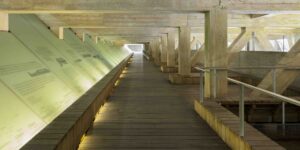
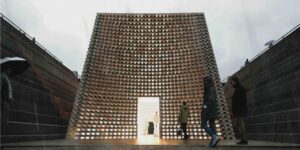
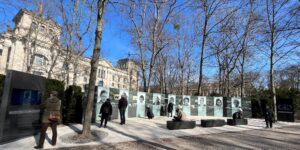
Krystel Gualdé, Nantes History Museum All images: Memorial to the abolition of slavery, Nantes (Loire-Atlantique) © PHILIPPE PIRON /LVAN In Nantes, there is a place where silence speaks, where footsteps slow, caught by the weight of a long-buried history. A vibrant place, on the riverbank, where memory takes form: the Memorial to the Abolition of …
Andrew Davies, University of Liverpool, and Nick White, Liverpool John Moores University1 Liverpool’s waterfront1 is currently undergoing major change as part of the Waterfront Transformation Project, a multi-million pound process coordinated by National Museums Liverpool with multiple funding bodies and significant community involvement2. This project seeks to reimagine the city’s historic docks and port in …
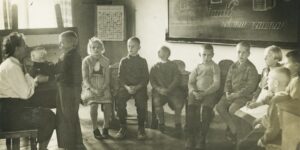
Hisayo Katsui, University of Helsinki Cover picture: Teaching and articulation lesson of sound at the School for the Deaf in Turku (Archive of the Finnish Deaf History Society) Background of the truth and reconciliation process In June 2025, the Finnish government initiated a truth and reconciliation process with the deaf and sign language community and …
Monika Baár, European University Institute Cover Picture: The tomb of Louis Braille at the Panthéon in Paris. Lucas Werkmeister, CC BY 4.0, via Wikimedia Commons The field of memory studies has flourished in recent years. However, the memory culture of people with disabilities remains a blank; it still belongs to what might be termed “subaltern …
This edition highlights issues like the Samudaripen/Porrajmos memorialisation, transnational heritage projects, and Argentina’s ESMA Memory Site Museum. Through diverse articles and reviews, we explore the role of archives, cultural heritage, and multidisciplinary approaches to memory. We remain committed to fostering critical reflection and collaborative action for a more just society.
Archives have prominent roles in memory work. They do not preserve or carry memories per se but provide documentary and material sources for collective memory creation and, increasingly, space for memorialization. A 2020 UN report on memory practices in the aftermath of grave human rights abuses explicitly relates the effectiveness of memorialization—the “fifth pillar of transitional justice”—to the existence of and access to relevant archives.
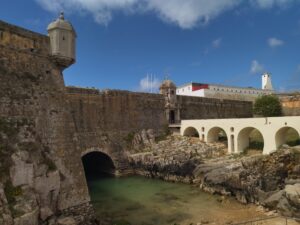
On 27 April 2024, the doors of the new national museum were opened. The President of the Portuguese Republic, Marcelo Rebelo de Sousa, presided over the official ceremony as part of the 50th-anniversary celebrations of the Carnation Revolution. Half a century after the prisoners were freed, the terrible Peniche Fortress has finally become an essential museum for understanding the longest dictatorship in Western Europe and celebrating the Portuguese people’s fight for freedom.
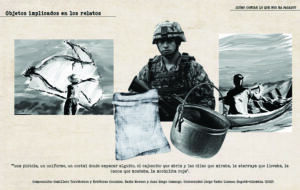
In his work Voices from Chernobyl (2015), in the chapter ‘Monologue on Why People Remember’, the Belarusian writer Svetlana Alexievich presents us with the testimony of the psychologist Piotr S., who asks, why do people remember? “Is it to restore truth? Justice? To free themselves and forget? Because they realise they have been part of a great event? Or because they seek some form of protection in the past?” This is the account of an ‘ordinary’ man, reflecting on one of the human tragedies that, beyond the intention to quantify it through the force of its death toll, impacts as profoundly as the Holocaust, the repression and disappearance of people during the civil-military dictatorship in Argentina, or the more than nine million people recognised as victims of the social and armed conflict in Colombia.
This edition highlights issues like the Samudaripen/Porrajmos memorialisation, transnational heritage projects, and Argentina’s ESMA Memory Site Museum. Through diverse articles and reviews, we explore the role of archives, cultural heritage, and multidisciplinary approaches to memory. We remain committed to fostering critical reflection and collaborative action for a more just society.
José Miguel Gastón Aguas and César Layana Ilundain, Navarre Institute of Memory, Government of Navarre