
Life in the GDR and the fall of the Berlin Wall
Nora Buschmann’s testimony connects her childhood and youth in East Berlin, life under the German Democratic Republic (GDR), restricted mobility and the fall of the Berlin Wall with the wider history of Europe’s political transformation in 1989.
Her testimony has generated two Synthetic Memories, focusing on her experience of growing up with restricted freedom of movement, living with the Berlin Wall as part of everyday life, and witnessing its opening and the events that followed in November 1989.
Childhood and restricted mobility in the GDR
Nora grew up in East Berlin and remembers her childhood as both protected and marked by limits. At the age of ten, she already felt that she was not free to move as she wished. Looking at a map of the world, she became aware of how many countries she could not visit, a restriction that made her feel sad and angry.
At the same time, she recalls positive aspects of life in East Germany, including its education and healthcare systems, as well as the solidarity among friends and neighbours.
The Berlin Wall as a lived reality
For Nora, the Berlin Wall was not simply a political symbol but a physical presence in the city. She often visited a friend who lived in a building on a street divided by the Wall, where she could see the barrier and the space she was not allowed to cross.
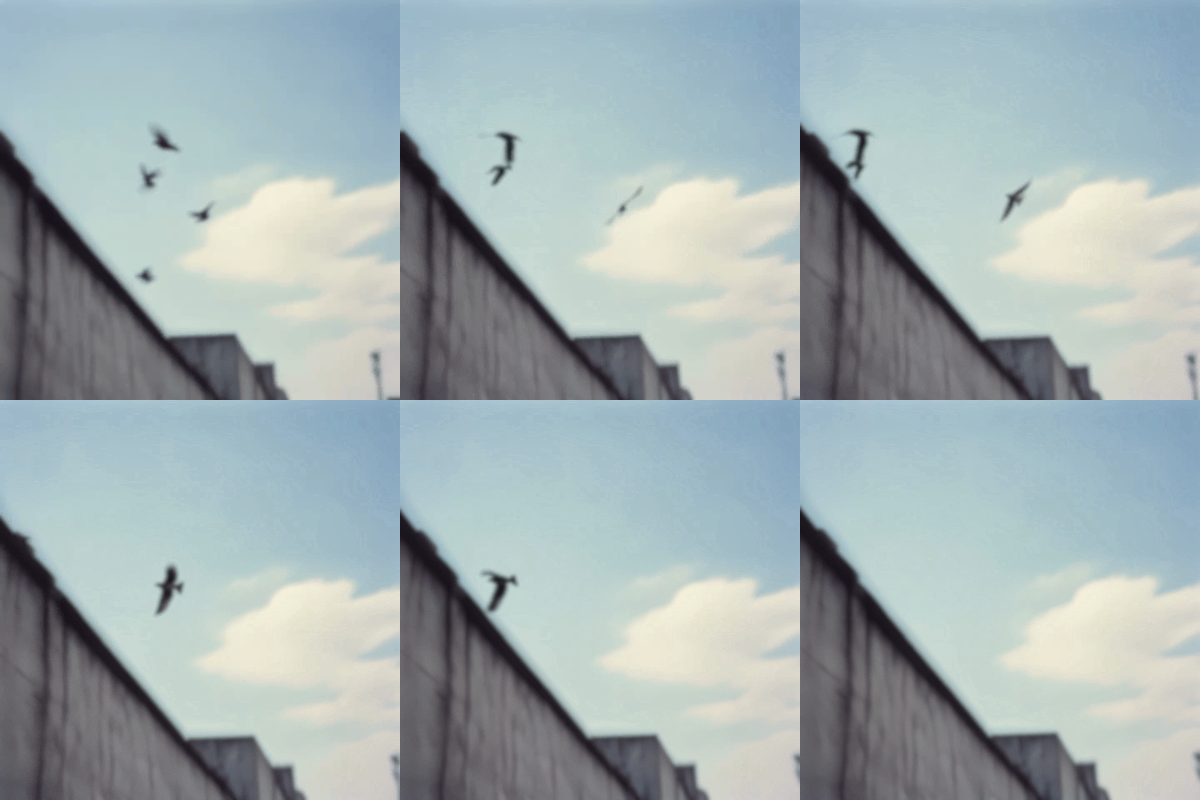
She remembers watching birds flying freely over the Wall and contrasting their freedom of movement with her own inability to cross to the other side. This everyday experience became part of her understanding of freedom and confinement.
1989: demonstrations and the opening of the Wall
In 1989, while studying music in Weimar, Nora returned to Berlin to visit her parents. By then, many people were leaving East Germany through Hungary or occupying embassies, while demonstrations were growing. When a friend suggested that the regime and the Wall might soon disappear, Nora initially believed the opposite would happen and that repression would intensify.
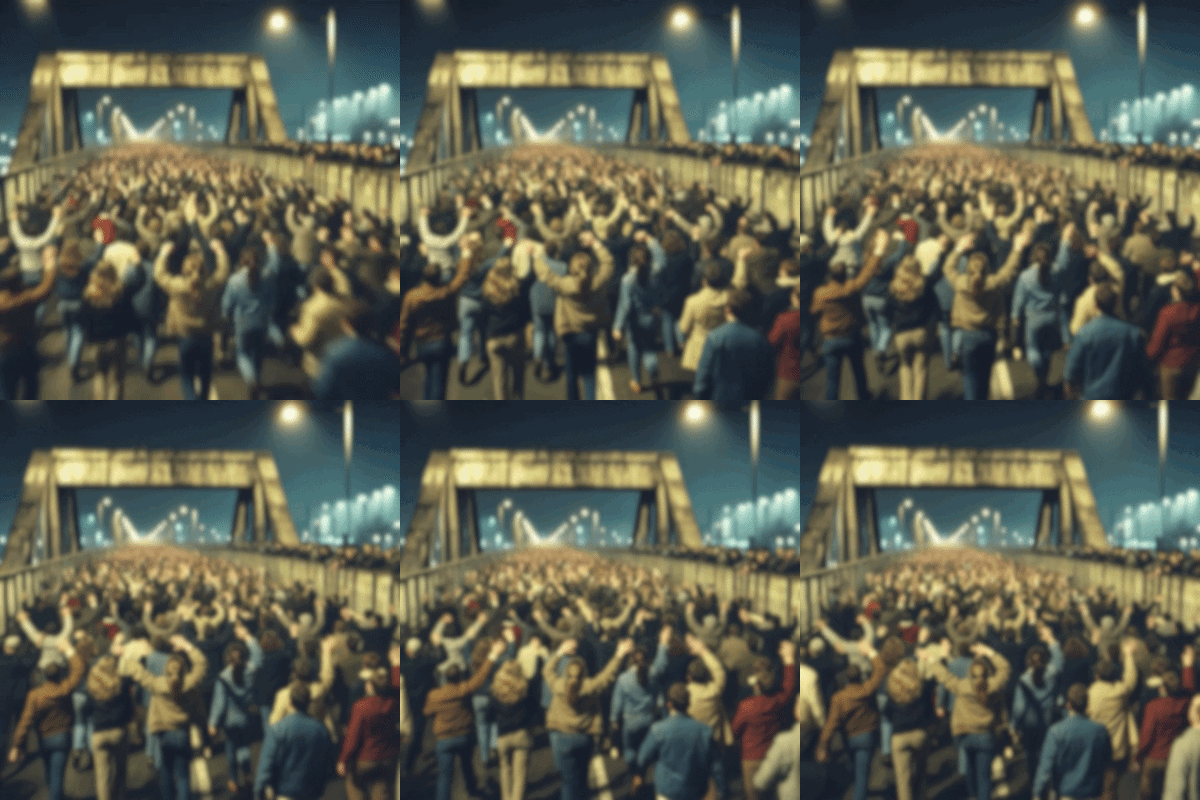
Then, almost overnight, she heard on television that people could cross the Wall with a normal passport. The following day, she crossed a bridge with friends alongside thousands of others. On the other side, people from West Berlin welcomed them with embraces, coffee and gifts.
Witnessing a historic transformation
Nora spent the night watching the Wall being dismantled at Potsdamer Platz. She remembers the crowds, the international visitors who had come to witness the moment, and the sense that something once thought impossible was becoming reality.
As a music student, she also recalls attending a concert by Daniel Barenboim and the Berlin Philharmonic, where East and West Berliners suddenly found themselves together in the same audience. Meeting friends from her past in West Berlin, only days after the Wall had fallen, became another deeply emotional experience of this historic transformation.