Kostis Kornetis, Universidad Autónoma de Madrid. Academic Advisor of the Commissioner for the Commemoration of “Spain in Freedom: 50 years”
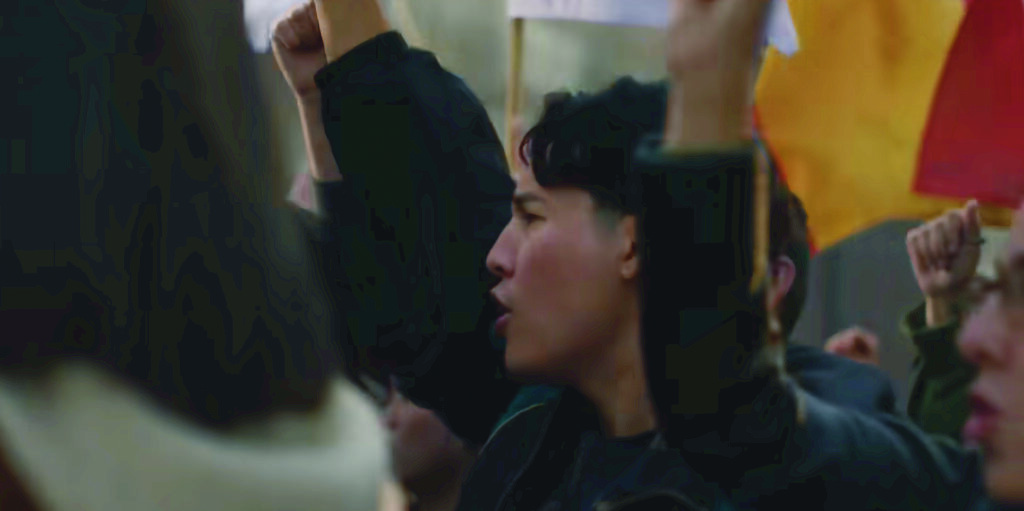
Cover image: Screenshots from the video of the campaign Democracy Is Your Power, presented as the closing highlight of the Spain in Freedom commemoration.
The word ‘restless’ in this article’s title echoes Inquietud. Libertad y democracia, the exhibition that recently opened at La Casa Encendida in Madrid. That show refuses the comfort of a tidy timeline. Instead, it stages a conversation across the Peninsula: Portugal’s April 25 glances at Spain’s post-Franco dusk; the memory of colonial war unsettles Spanish silences; documentary photography and essay film turn commemoration into debate. This piece adopts the same stance—less celebration, more friction.
Fifty years on, the task is not to refurbish a heroic tale of the transitions. It is to ask how to narrate them without shortcuts: how to hold together rupture and continuity, elite bargains and pressure from below, official ceremony and lived memory. Setting close histories side by side restores complexity and reminds us that democracy—like the memory that sustains it—is not an ending but a practice.
From templates to texture
For years we leaned on a convenient template: Portugal as rupture tipping toward revolution; Greece as abrupt collapse followed by the trials of the Colonels; Spain as negotiated reform anchored in consensus. Useful as scaffolding—but flattening in effect. Over the last two decades, historians have moved beyond transitology’s chessboard of leaders and “pacts,” recovering the social underlay and cultural tempos that institutional accounts compressed. We’ve shifted from tidy typologies to thick description.
At the fortieth anniversary, one influential project reframed “transition” as a chronotope: a lived weave of politics, culture, and everyday life. That lens redirected attention from constitutional milestones to the workshop of daily practice—neighborhood assemblies, women’s groups, print collectives, parish halls, underground cinema—where expectations and languages were rewired. Soon after, another current treated 1974–75 as a charged moment: a hinge condensing earlier processes and radiating forward. Between those poles—time-space and moment—recent work prefers to map fields of inquiry rather than police periodization.
Look beneath the constitutional summary and a dense ecosystem appears: youth sociabilities, music and aesthetics, self-organized neighborhoods, second-wave feminism, emerging LGBTQ collectives inventing spaces and vocabularies, cinema and photography testing new ways of seeing. In this register, transition ceases to be a string of back-room deals and becomes a laboratory of ways of life. Change the vantage point and the timeline shifts: what seemed swift institutionally was, culturally, a slow layering in which authoritarian reflexes did not vanish overnight but reassembled themselves in law, habit, and feeling.
Two historiographical turns matter. First, the social-movements turn: rather than treating protest as background noise or elite leverage, historians show how collective action eroded legitimacy, raised the cost of repression, trained people in democratic claims, and signaled preferences to would-be reformers. Second, the local turn: micro-histories of cities,
neighborhoods, and workplaces replace pressure-cooker myths with patient reconstructions of how identities formed and coalitions held—women organizing a water tap with the parish, student circles becoming community organizers, shop-floor experiments in representation. The result is richer and bumpier—harder to generalize, closer to life.
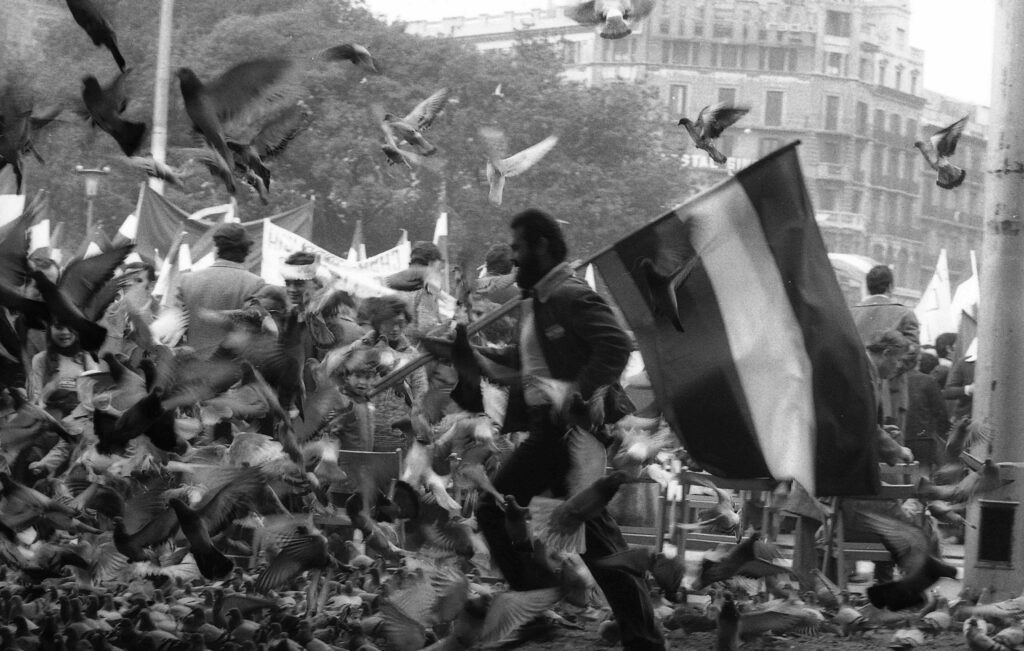
Using Greece to rethink the Iberian triangle
Greece offers a clarifying counterpoint. Two dates coexist: July 24 as the institutional reset in 1974 and November 17 as insurgent memory of the Athens Polytechnic uprising that shook the Junta to its foundation in 1973. Greek experience suggests that democratic legitimacy is rooted both in the rule of law and in street memory. Early on, public pedagogy made the exposure of torture, the conversion of sites of repression into places of memory, and the junta trials part of the country’s civic grammar—not moral add-ons but constitutive choices. For all their limits, they left a durable mark: even today’s quarrels unfold over a basic consensus about the dictatorship’s illegitimacy.
Portugal stages a different story, visible in the intensity of 1974–76. The epic of April 25 still radiates civic energy, yet it coexists with the hard reckoning over the colonial wars and the mass return of retornados. Public history has been stitching those edges into the larger tapestry, avoiding both celebratory complacency and strategic amnesia. The memorial landscape—prisons turned museums, archives opened to communities—makes remembrance tangible and teachable.
Spain, perhaps because of its symbolic weight, remains the most contested ground. The “myth of moderation,” invaluable for stabilizing institutions, served for decades as a password of belonging. When civil society pressed for truth, justice, and reparation in the twenty-first century, a cognitive dissonance emerged: what had been presented as
universal virtue looked to many like a shield against unequal access to memory. The current democratic-memory agenda does not deny the value of the pact; it removes its aura of untouchability. That does not weaken democracy; it matures it. Pluralizing the story is not vandalism. It is democratization.
Zoomed out, path-dependent legacies come into view. Portugal’s revolutionary rupture arguably widened participatory repertoires and left deeper everyday democratic reflexes than Spain’s elite-brokered reform; Greece sits somewhere in between, with early judicialization and a strong didactic memory culture. None of this is fate, but each route cut grooves—in commemoration, conflict management, archival openness—that still guide debate.
Exhibiting complexity: Madrid and Athens as method
A serious commemoration cannot stop at institutional filigree. The essential question—how to transmit the history of dictatorship and transition to people born half a century later—forces a rethink of pedagogy, exhibition design, and language. Madrid’s commitment has a mirror in Athens. The National Gallery’s Democracy (July 2024–February 2025) was the first major comparative show on artistic responses to the dictatorships of Greece, Portugal, and Spain in the 1960s–70s. Its sections—“Facing the Enemy,” “Resistance,” “Uprising,” “Arousal”—undid the storybook arc of transition, restoring texture: violated bodies and bodies that resist; graphic collectives, posters, performance, and archive; the Polytechnic and April 25 in conversation with Spain’s post-Franco years. In Madrid, Inquietud likewise rejects textbook chronology to propose an Iberian montage where Vieira da Silva, Equipo Crónica, and Paula Rego cross paths with contemporary practices. The aim is not to “teach” a single storyline but to converse about productive friction.
What matters in both Democracy and Inquietud is its capacity to decenter national narratives without dissolving them. The imagery of repression and desire—from grieving mothers to occupied squares, from militant printmaking to essay video—reminds us that the transitions do not belong in a cabinet of political curios. They were also cultural experimentation, a rehearsal of citizenship, a choreography of bodies in public space. If these shows teach us anything, it is that the fiftieth anniversary settles nothing. But it opens questions: how to narrate without heroics and how to sustain, today, an ethic of transmission that resists banalization and distortion.
Today’s media ecosystem adds a new challenge. Algorithmic circulation—micro-targeting that builds bubbles and an attention economy that rewards hatred and outrage—erodes minimal common ground about the past. Ironizing pain, fabricating “historical” scenes with synthetic imagery, trivial edits of testimony: all of this adds noise where care is needed. The answer is not censorship but smart defenses—archival accessibility, document traceability, media literacy,
verification protocols—and, above all, a curatorial ethics that remembers that there are lives and losses behind every single document.
What the anniversary asks of us
The half-century reminds us that democracy was not inevitable. Contingency, fear, commitments, errors, courage—all were present. To recall contingency is to return agency to those who struggled and to inoculate ourselves against complacency. Democracy is not an end in itself; it is a daily practice. Memory, then, is not an album for anniversary browsing but a civic instrument that updates our questions: What do we do with the invisible continuities of authoritarianism? How do we handle sensitive archives without violating rights? How do we bring territorial, social, and cultural peripheries into the center of the story?
Historians have a double task. First, to keep complicating comparisons—not to blur differences but to illuminate them without caricature: the Portuguese revolution and its reversals; Greek judicialization and its public pedagogy; Spanish reform and its shadowed zones. Second, to write history that speaks to the public without submitting to it: a history that explains and de-idealizes,connects structures with experiences, and can say “we don’t know yet” without apology. That quiet honesty is, paradoxically, the firmest commitment.
There is also a material register: monuments and street names, audiovisual archives and civil cemeteries, popular sociabilities and city rhythms. Democracy lives not only in texts, but in material remains. Fifty years is long enough for marks to fade—or for silences to deepen. Redrawing the map—signposting, contextualizing, preserving—is not a minor symbolic act. It is memory policy in the strict sense.
These three stories have spoken to one another from the start. Exiles crossed borders; solidarity networks enabled resistance and learning; foundations circulated resources and know-how; intellectuals imagined comparisons before academia ratified them. Keeping that transnational thread alive—through method, not cosmetics—may be the best defense against today’s inward turns. The Ibero-Hellenic-Mediterranean conversation is not conference nostalgia; it is a commitment to a European citizenship able to face the past without losing sight of the present storm.
To commemorate, in this key, is not to repeat a story we already know but to try new ways of telling it. Institutions do their part when they open archives, protect victims’ voices, nurture a culture of rights, and sponsor informed disagreement. Academia helps when it offers rigorous, porous narratives attentive to peripheries and cultural tempos. And art keeps
circulating questions that don’t fit in regulations, reminding us—something the seventies already knew—that freedom is also a sensibility.
Half a century on, for us at the Comisionado “España en Libertad. 50 años” the simplest lesson remains the hardest (and hence the restlessness): we do not celebrate democracy to fall asleep; we celebrate to stay awake.