Interview with Amos Goldberg
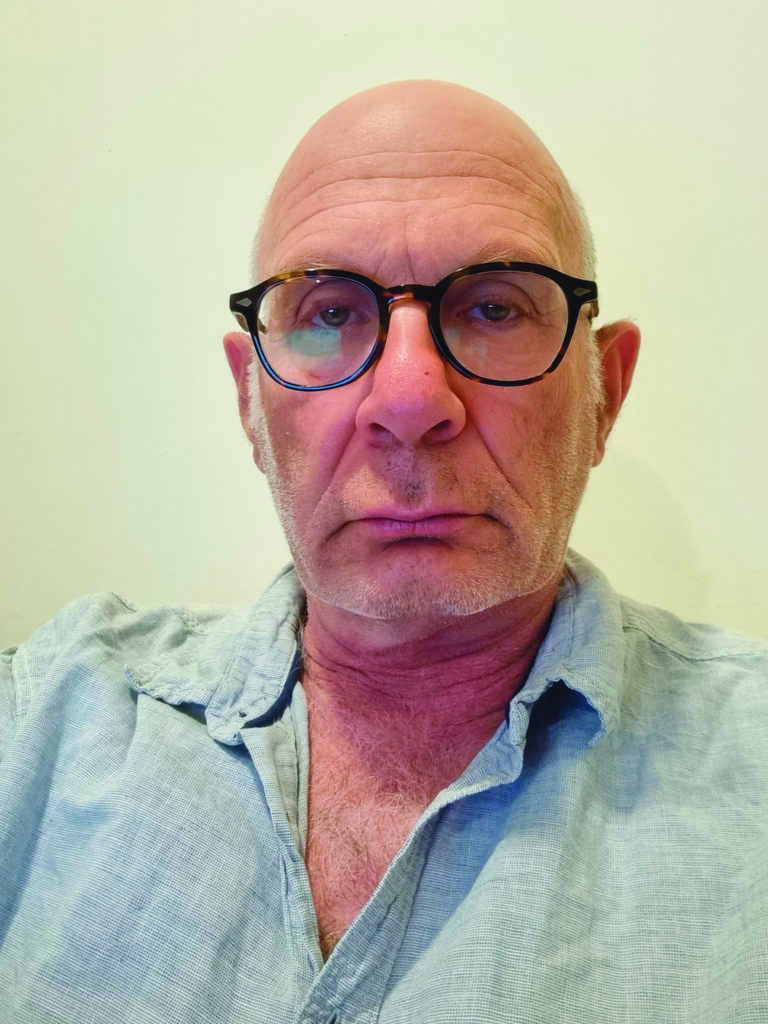
Amos Goldberg (Jerusalem, 1966) is a professor in the Department of Jewish History and Contemporary Jewry at the Hebrew University of Jerusalem and a fellow at the Van Leer Jerusalem Institute. Goldberg has held research fellowships at international institutions such as Cornell University, the United States Holocaust Memorial Museum, CUNY and the Institut für die Geschichte der deutschen Juden in Hamburg. His work focuses on the cultural history of the Holocaust, testimonial literature and studies of memory and trauma.
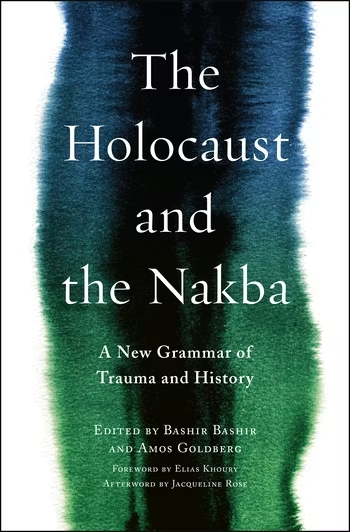
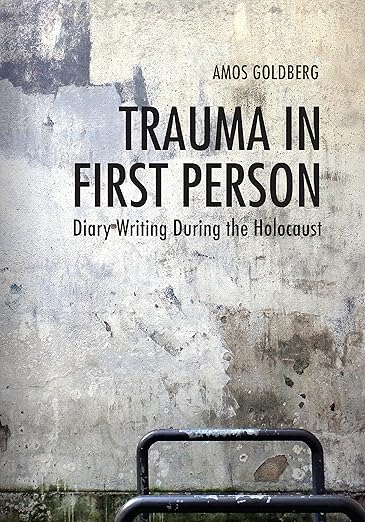
Among his most influential publications are the award-winning Trauma in First Person: Diary Writing During the Holocaust (Indiana University Press, 2017); The Holocaust and the Nakba: A New Grammar of Trauma and History (Columbia University Press, 2018, co-edited with Bashir Bashir) and his recent Hebrew book: You Shall Remember: Five Critical Readings in Holocaust Memory (2024). In his writings he established himself as an international authority in the critical study of the Holocaust and its memory, and their contemporary resonances. In April 2024 Goldberg published an article on Gaza in the Hebrew online magazine Local Call, “Yes, It is Genocide” which was the first in Hebrew to acknowledge the genocide and which was translated into multiple languages.
The set of interview questions was forwarded to the interviewee in June 2025, with the responses subsequently submitted in September 2025.
The Holocaust remains as a central reference point for the study of genocide and mass violence. How does it help explain or interpret crimes and atrocities taking place today?
There is an inherent contradiction or at least tension in the question itself. For it assumes a special feature that the Holocaust possesses which makes it an important reference point for understanding other cases of mass violence. But if the Holocaust can be compared to other cases of genocide and mass violence, then what is fundamentally different about it? And why should it specifically serve as such an ultimate reference point? The contradiction/tension can also be formulated in a slightly different way. On one hand, it is customary to argue that one should engage with the Holocaust on the grounds that it is a paradigmatic case of genocide because it contains in extreme form all the components of the phenomenon. But on the other hand, precisely as such, many argue that it is a unique case which no other case truly resembles, and therefore one cannot really learn from it about other cases. Such is, for example, the position of Saul Friedländer.
The belief in the specialness and uniqueness of the Holocaust has become among many an unnegotiated fundamental that makes it difficult to learn from it analogically about other cases, and analogies are often received in one of two ways. On one hand, in any comparison one must emphasize how much the case does not reach the level of cruelty and extremity that characterized the Holocaust, which in practice allows for the normalization of those other events—they are, after all, not “like the Holocaust.” And on the other hand, in cases that are politically sensitive to Western, Israeli, or Jewish ears (e.g. regarding Israel), the comparison is completely forbidden since it is perceived as banalization of the Holocaust or even as antisemitism.
Therefore, I think that the use of the Holocaust—despite it being a very radical case of genocide—as a special and unique reference point is in fact very problematic historically, and very harmful morally and politically.
Such a hierarchy does not exist in any other comparative field—is there in nationalism studies one case that is a paradigmatic case in light of which all other cases are studied? Does it exist in the study of empires or revolutions? Is there one case of a revolution or historical empire that receives such a central and almost theological status? Comparative research assumes fundamental equality of all members in the comparison group. And this is how it should be with regard to the Holocaust as well despite it being one of the most extreme cases of genocide.
While Holocaust memory has long shaped EU remembrance politics, the eastward enlargement in the early 2000s introduced post-communist perspectives that often equate Nazism and Stalinism. What are the implications of integrating these narratives into a shared European memory?
In September 2019, the European Parliament adopted by a large majority a resolution calling for the commemoration of the crimes of both the communist regimes and the Nazi regime, and even established August 23 as a day for commemorating the victims of crimes by all totalitarian regimes. In many respects, this resolution revives the conceptual world of Hannah Arendt from the early 1950s during the Cold War, who spoke, at least ostensibly, in her book “The Origins of Totalitarianism”, of both: the Nazis and the Stalinist Soviet regime as two forms of totalitarian regimes. Since then, the concept has largely lost the appeal it had during the Cold War.
The resolution itself has several aspects in my view. On one hand, it expresses the current situation in Europe where nationalism and even ultranationalism are rising again. Often the memory of suffering from the communist era expresses these tendencies. On the other hand, the suffering of Eastern European peoples under communist rule, which was at times, especially during the Stalin era, extremely murderous, receives recognition and this is a blessed matter and might also somewhat calm the “memory wars.” But this begins to be particularly problematic in my view when the memory of the crimes of communist regimes is intended to obscure the horrors of the Nazi regime and its partners and collaborators in many countries in Eastern Europe such as Romania, Hungary, Ukraine, etc. The hope is that the extension and inclusion of memories will enable more recognition and more political responsibility and not the opposite. Nonetheless, I have a concern that this is primarily an expression of the growing exclusionary ethnic-nationalism of Eastern European peoples who place their national suffering as victims at the center of their identity and wash away the more problematic aspects of their histories of wrongdoing and collaboration. We see how destructive Holocaust memory was when it serves ultra/ethnic exclusionary national identities (for Israel and in other forms also for other nations in Europe), and there is a concern that expanding the memory paradigm will only deepen those same tendencies in Europe and beyond.
In light of the evident lack of credibility in Holocaust denial, the fight against its distortion seems to have gained greater importance. From your perspective, what do you consider to be the main threats today in terms of Holocaust distortion?
I usually tell my students that despite all the paranoia that is maintained for political reasons, the phenomenon of “Holocaust denial” has become extremely marginal, while the more interesting phenomenon historically and culturally is precisely Holocaust memory that has become so dominant even in places like the USA, South Africa, and Australia that have almost no direct connection to the Holocaust. But memory itself doesn’t seem sacred to me, not even Holocaust memory. At the end of Imre Kertész’s (a Hungarian Holocaust survivor and Nobel Prize laureate in literature) book “Fatelessness,” the protagonist, a young Holocaust survivor, raises the possibility that he too will forget the horrors of Auschwitz. In 1988, the Israeli intellectual and Holocaust survivor Yehuda Elkana wrote a long article called “In Praise of Forgetting” because he thought that Holocaust memory was politically and morally corrupting Jewish society in Israel. The more important question then, in my view, is what values and forms of identity do memory or its distortion establish?
So there are three types of Holocaust distortions that frighten me particularly because they embody a distorted historical understanding of the past that is intended to support anti-democratic conceptions in the present. In the past, nationalists and fascists simply denied the Holocaust because it cast a heavy shadow over the history of their peoples. Today the trend is different: many recognize the Holocaust and honor the memory of the Jews, but “we” (Hungarians, Poles, Bulgarians, Dutch, etc.) they claim, had no part in it. We were on the good side of history. In Germany, the AfD tells a different story. The Nazi period was just a comma within Germany’s glorious history. And in the Israeli context, the argument about “the uniqueness of the Holocaust” is a dangerous distortion of it, which serves today the genocidal nationalist narratives of the State of Israel and its supporters and has enabled the Western world to support the occupation, apartheid, and now genocide in Gaza.
I think that any memory that does not examine the political and historic foundations of mass violence in order to better understand it and prevent it, but focuses only on suffering and victimization, is a distortion.
In the context of the current conflict in Gaza, comparisons have been made between the actions of the State of Israel and the Holocaust—both by those who condemn them and by those who justify them in the name of preventing future existential threats. How do you interpret these tensions in the use of Holocaust memory in such opposing discourses?
I don’t think there is symmetry and I also don’t think one should always think in symmetrical terms. There is no comparison between Hamas and the Nazis, and between Israel’s situation and that of the Jews in Europe in the thirties and forties. Hamas is a local and relatively weak organization in one of the poorest places on earth, that managed to strike Israel heinously, criminally and unprecedently on October 7 with extremely meager means. Some of its ideological manifestos like the 1988 charter contains clear antisemitic elements (though it was amended in 2017 and those antisemitic notions were not included). Nazi Germany was a huge empire who ruled over almost of all of Europe and beyond. The Jews in Europe were powerless. Israel is one of the strongest military powers in the world, even if it suffered a huge and very traumatic blow. Without justifying Hamas’ criminal attack, it can and should be explained politically. It was launched because Israel had almost succeeded in eliminating the Palestinian people politically with the Abraham Accords, the change of status at Haram al-Sharif (The Temple Mount), because of the siege on Gaza, the apartheid, and the annexation. We should also remember that some 70% of the population in Gaza are refugees from the 1948 ethnic cleansing (the Nakba). The Nazis murdered the Jews because they were Jews and had all sorts of insane conceptions about them, among other things that they were the most dangerous enemy to Germany. There is no comparison. Those who make this comparison do it in order to defend Israel’s genocidal response and to dehumanize the Palestinians. I should note that I do not include in this critique those victims of the October 7 who described their experiences in the first days following the attack by using Holocaust related language in order to express their radical trauma.
This rhetoric was the most culturally available to them to describe their trauma. On the other hand, Israel is committing genocide and ethnic cleansing in Gaza. It also commits a slow pace ethnic cleansing in the West Bank and operates there and perhaps also within Israel an apartheid regime. All of this has already been determined by countless reports and studies. I will mention only the latest among them—the UN committee headed by Navi Pillay who was a judge in the Rwanda tribunal. This committee reached an unequivocal conclusion that Israel is committing genocide in Gaza. So as Daniel Blatman and I wrote in January 2025 in the newspaper Haaretz: there is no Auschwitz and Treblinka in Gaza, but Israel is committing a crime from the same family—the crime of genocide.
Some thinkers, like Enzo Traverso, argue that invoking the memory of the Holocaust to justify acts of war can distort its true meaning and undermine the core values of modern democracies. In your view, to what extent can the political use of the Holocaust harm democracy and public debate today?
Unfortunately, I agree with Traverso. Holocaust memory and what is called “the fight against antisemitism” have been transformed from a tool that educates for human rights, emancipation, and equality into a tool that enables systematic violation of human rights, ethnic-nationalism, and today also genocide. In the study of mass violence, one always distinguishes between the causes that led to mass violence and the factors that enabled it. To my great horror and sorrow, Holocaust memory and “the fight against antisemitism” have become factors that enable the genocide in Gaza and its continuation.
Holocaust memory that began as an emancipatory project of the left in the 1960s gradually migrated to the liberal center in the 1990s, and during the 2000s it positioned itself on the right and even the radical right. One dreadful outcome is that it enables genocide and prevents effective protest against it.
Though I should also mention that some of the most vocal voices against the genocide come from the field of Holocaust studies.
The current situation in Gaza has sparked significant debate among genocide scholars, with divergent views on whether it constitutes genocide. What is the prevailing expert view, and what are the main points of disagreement? What criteria should be used to assess such cases rigorously?
I want to dispute again the symmetry inherent in the question. A genocide is currently taking place in Gaza. There are scholars who have recognized the genocide and those who are trying to deny it. Exactly like regarding the Armenian genocide and regarding the Holocaust. At Ariel University, which is located in the occupied West Bank, there is a “Center for Genocide Studies,” so its head of course denies that genocide is taking place in Gaza, but they themselves violate international law every day and are partners in the apartheid regime in the occupied Palestinian territories. This is a matter of denial, not opinion. Almost all genocide scholars who expressed any opinion (and did not prefer to remain silent), including the International Association of Genocide Scholars itself, have recognized that genocide is taking place in Gaza. There are some Holocaust scholars, some of them very prominent, who joined the denialist camp for unclear reasons. And I want to clarify that by “denial” I am not referring to everyone who doesn’t use the term “genocide” but rather to all those who minimize the magnitude of the horror and try to deny, justify or belittle Israel’s crimes.
Now, there is a legal question. The Genocide Convention establishes that legally there must be an “intent” to destroy in whole or in part a racial, national, ethnic, or religious group as such. Proof of special intent to destroy (and not an intent, for example, to solely harm a legitimate enemy even if causing collateral damage to many civilians) is very difficult, and international tribunals raised the standard of proof even higher in the 1990s. Among legal scholars there is disagreement whether it is possible to prove Israel’s intent to destroy the Palestinians in Gaza in whole or in part in a way that would satisfy the legal high bar. But even those who are not certain about this (but also not certain that not), for example like Philippe Sands, mostly argue that substantively genocide is taking place in Gaza because there is intentional destruction of a national collective even if there is no intent to murder each of its individual members and even if the legal proof for
this intent might not satisfy the very high bar that the courts set. However, recently there has been a change.
Even cautious voices like that of William Schabas, who is perhaps the most significant legal scholar of this topic and hesitated greatly for long months to decide on the issue, recently argued that in his opinion this is the strongest and most well-founded case brought before international tribunals on charges of genocide. The unequivocal determination of the UN committee headed by Navi Pillay that I mentioned only strengthens this argument. This adds to the more than ten lengthy reports by various serious organizations (including two Israeli Human Rights organizations) and many dozens of scholars that a genocide is taking place in Gaza.
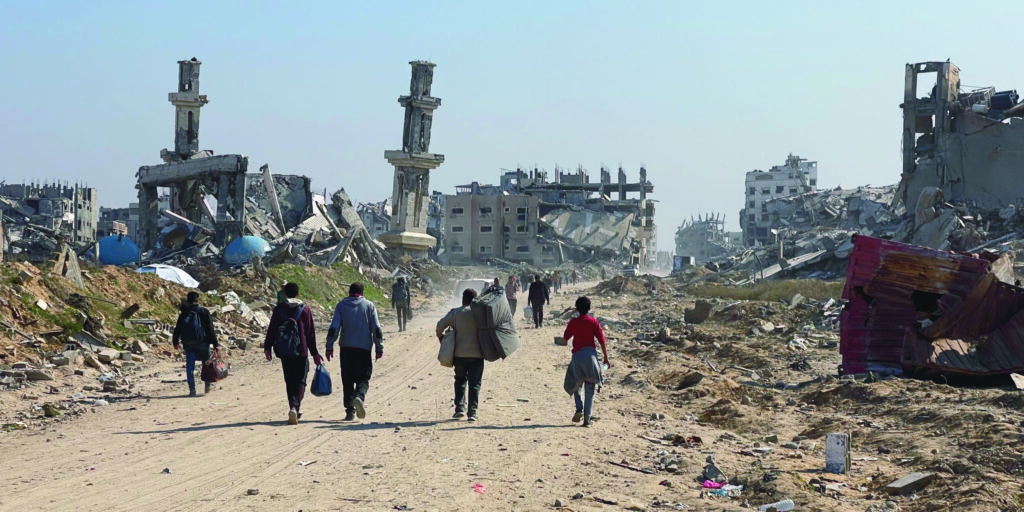
And I wish to add one more comment. Genocide does not need to look like the Holocaust in order to be genocide. If one reads the writings of Raphael Lemkin, one understands that what he conceived as genocide is the erasure of a collective through various means including mass murder but also destruction of the physical infrastructures and social, cultural, and political frameworks that create a collective from a collection of individuals. He also believed it is a process that can take decades. This is what is happening today in Gaza and this is the point for example Philippe Sands makes. Destruction of an entire collective not only physically but of all the physical, medical, religious, social, and political infrastructures, including destruction of the elites (journalists, officials, doctors, lecturers, etc.) and including systematic destruction of all the buildings that created the personal and collective lives of 2.2 million people. The intention is evident in endless genocidal utterances made by the highest officials, army officers and regular soldiers. It can also be discerned from what courts call “the pattern of conduct” including systematic and overwhelming acts of humiliation and countless incidents of sexual crimes. Those indicate that the Palestinians were stripped off their humanity in Israeli eyes. Anyone who does not see that there is a full destruction here is denying the horror. They are not interpreting the reality or the Convention on the Prevention and Punishment of the Crime of Genocide differently. In Turkey there are historical institutes that produce endless “knowledge” of Armenian genocide denial. This does not make what they write historically legitimate or equivalent to the true history written about the Armenian genocide.
From your dual perspective as an Israeli citizen and a genocide scholar, do you perceive this as a historical moment that could mark a turning point both in the history of the country and in the broader understanding of mass atrocities?
It is still too early to know how the events we are witnessing will unfold, but I have no doubt that they will fundamentally stain and haunt Israeli history and also Jewish history for generations to come. I write this in enormous pain
From here on, we will all need to examine retroactively what in Jewish culture, religion, and history—especially in the way they were interpreted and understood in Israel and by its unconditional supporters—brought about and enabled the genocide. But this is not only a matter of Israel. The Jewish world is very divided in its relation to the genocide in Gaza, which is also spilling over, meanwhile at low intensity and in the form of slow but steady ethnic cleansing, to the West Bank. Many Jews, mainly abroad but also in Israel, are at the forefront of the struggle against Israel’s actions. But the vast majority of mainstream institutional Jewish world stands almost entirely alongside the State of Israel and pushed for the suppression of global protest against it. As historian David Myers wrote on the eve of Tisha B’Av this year, the day on which Jews have marked for thousands of years with fasting and mourning the destruction of the Temple, the Jewish institutional world will need to perform very deep soul-searching about its unconditional support for Israel at this time.
Regarding the impact on the study of “mass violence,” here too it is still early to say what the impact will be, but it will certainly have a very significant impact. I think that this field suffers from an increasingly acute split to the point that different groups within the field will not have a common language and certainly not a common moral framework with one another. Each group will create its own research frameworks, institutions and discourses. But beyond this, because of the focus on the legal definition of genocide in the context of Gaza and the centrality of the question of intent in the political debates, I fear there will be a very problematic return of the research and academic field to focusing on understanding mass violence through the question of intent, which from a historical, sociological, and other scholarly perspectives is not necessarily the most important. When examining the causes and the enabling factors of any historical event (events of genocide and mass violence included), direct intent is not necessarily the most important. One can think of structural, cultural, economic, political, psychological, sociological etc. elements and contexts that are just as important and many times are even more important for understanding the event. This “return” might take the whole field of Holocaust and Genocide studies decades back to a crude form of “intentionalism”. I wrote about this in an article in the Journal of Genocide Research called “The problematic return of intent.”
At a time when Europe is increasingly confronting its colonial past, do you think there has been insufficient attention to the idea of Israel’s creation as a potentially colonizing project—one that was, in part, supported or promoted by certain European nations in the aftermath of the Holocaust?
In Zionism and in Israel, and as some of the big figures of Zionism acknowledged, foremost among them Ze’ev Jabotinsky (“The Iron Wall 1923”), there is a central component of settler colonialism. This concept cannot exhaust the understanding of Zionism, which is a very complex phenomenon, but it is necessary in my opinion for any true understanding of it. Understanding Israel only from the European-Christian and Jewish perspectives of the people of the Bible returning to their land, and of a safe haven for Holocaust victims who found refuge and a place where they could recover, suppresses the understanding that Israel is a political project that has a very strong component of settler colonialism.
Part of the terrible violence of Zionism—whose two peaks are the Nakba of 1948 and the unfolding genocide in Gaza whose end is not yet in sight—stems at least partially from this as settler colonial projects contain an inherent eliminatory impulse within them. They want to replace the native population, not to integrate into it. Understanding the State of Israel only as a “response” to the Holocaust and as a refuge for many of its victims (which is of course true) gave Israel an aura of sanctity which was translated into destructive political policy (for example the notorious German “Staatsräson”) that did not allow and still does not allow seeing these inherent violent aspects in Israel and in Zionism. This is part of the reasons for what is happening now in Palestine-Israel.
I want to imagine an emancipatory memory that integrates the story of the Holocaust and the story of the Nakba-now-becoming-a-genocide within its colonial context, despite the differences between them, into one entangled narrative.
This narrative will support an emancipatory political project of full equality of rights—personal, civil, and national—for Jews and Palestinians “from the river to the sea”. Together with the Palestinian political theorist Bashir Bashir, I have been deeply engaged for more than ten years in this “entangled memory” project. It is about narrating the two national stories in what Bashir calls an “egalitarian binational” way which should also lead to an egalitarian binational political solution and perhaps even an historical reconciliation in the future. This is a painful process of decolonization that includes the dismantling of all forms of Jewish supremacy in Palestine/Israel, mutual recognition, self-determination for both peoples, and establishing mechanisms of compensation, accountability and justice. This vision could be implemented in various political settings of one state, two states, federation, confederation etc. Together with other scholars we developed this thought in our book The Holocaust and the Nakba: A New Grammar of Trauma and History.
I must admit though that I am not sure whether and in what ways these ideas are still relevant following October 7 and in the midst of the genocide in Gaza. They seem now more remote from reality than science fiction. Sometimes I think that it is immoral to even talk about such ideas when dozens of children are dying of bombs and hunger every day in Gaza. But on the other hand, one hears also such voices coming now from Gaza itself.
In 2025, we commemorate the 30th anniversary of the Srebrenica massacre, whose recognition as a genocide has involved a long and complex process marked by legal and political tensions. What lessons can we draw from the case of Srebrenica today?
There are several things one can learn from the case of Srebrenica. But I would like to focus on two. First, the case of Srebrenica teaches how important the legal and international recognition that genocide took place is. It is not correct to say “genocide” is just a word and what difference does it make if we call the crimes this way or another (for example war crimes or crimes against humanity). The fact that Srebrenica was recognized as genocide forces us to think about the entire asymmetrical war between the Bosnian Serbs (with Serbia’s military support) and the Bosniak Muslims in Bosnia in a clearer way. And although all sides committed terrible crimes, there is ultimately one side that committed genocide. Had the tribunal not issued its ruling, I think the entire image of violence in Bosnia would have been different. And the second thing that can be learned from Srebrenica is that often even after the end of the genocide and reaching some kind of arrangement, destructive ultra-nationalist tendencies do not stop operating. And to this day the Serbs of Republika Srpska under the leadership of Milorad Dodik continue to undermine the stability of Bosnia and strive to separate and join Serbia. Genocide continues to operate its destructive effect many years after its physical end.
According to a European Commission statement from November 2023, recorded levels of antisemitism in Europe reached extraordinary levels—a context that seems to have solidified since then. Beyond the obvious connection to the events of October 7, 2023, how do you interpret this increase? What strategies should be implemented to combat it?
According to all the data, there has been an increase in antisemitic incidents around the world since October 7. Some of the reported incidents are truly frightening. Israel has not only become the most unsafe place for Jews around the world, it also endangers Jews all over the world. However, the extent of the increase and its features are unclear. The bodies monitoring the phenomenon very often consider anti-Israeli or anti-Zionist criticism as antisemitic. In most (not all; sometimes they indeed overlap) such cases I do not see those utterances and acts as such, and therefore, these reports are not credible in my view. A very important monitoring body in Germany considered, for example, a speech by Professor Moshe Zimmermann, an Israeli professor of German Jewish history and an expert on antisemitism and the Holocaust from the Hebrew University, as an antisemitic incident. And by the way, according to many surveys, a significant part of the increase in antisemitism following October 7 comes precisely from the far right. At the same time, there are also studies that show that, for example, among German students with leftist views critical of Israel, the level of antisemitism is the lowest of all other groups in the population.
I also want to note that it is interesting that the question directed to me deals only with antisemitism and does not deal at all with racism toward other groups—Muslim, Arab, Palestinians, immigrants. And certainly, it does not deal with the ways Jews and Jewish institutions or Israel express racism and hatred toward those same groups. As if the only important problem is antisemitism and not the racism against non-white people and particularly Palestinians, which is apparently much more violent and also more widespread and harmful. There is no very strong political lobby supporting the victims of these manifestations of racism. I will now try to answer the question more directly. First, there is no “one-size-fits-all” treatment for all cases of antisemitism in all places and in all times. And second, one must deal with both of these problems—racism and antisemitism—and not only with the problem of antisemitism. A significant part of any strategy should be combating antisemitism and anti-Palestinian/Arab/Muslim/immigrant racism together. The way to deal with antisemitism and racism in these contexts is first and foremost through interpersonal and intercommunal dialogue and mutual education—as long-term processes. These are not quick processes and also not easy ones. Because often there are conflicting memories, different perceptions of reality, etc. But this is in my view the only way to deal with both problems together.
In general, I would also add that the most correct and natural way to reduce levels of antisemitism and racism is through joint struggles of Jews, Arabs, and others against dictatorial or autocratic and anti-democratic forces, against racism, antisemitism and discrimination, against occupation, apartheid, and genocide, and for shared and equal life in Palestine/Israel and everywhere.
Such groups exist in Israel/Palestine, in the USA and elsewhere and present models of shared—even if at times tensely—struggle. I think that the first time a Holocaust exhibition was presented in a Palestinian village in the West Bank was in the village of Na’alin in 2009, where Israelis joined Palestinians in their nonviolent struggle against the apartheid wall of separation. It emerged from the joint struggle.
With the racist right there is nothing to talk about because there is no shared value base and hence they must be dealt with through legal means dealing with hate crimes and racism and through social delegitimization. I have nothing to say to those who shout “Jews will not replace us”. In any case, the worst way in my view to treat antisemitism is through frozen and one-sided definitions that do not suit the complex and changing reality. And certainly not through the IHRA definition of antisemitism that deliberately conflates anti-Zionism and criticism of Israel with antisemitism and whose entire purpose is to protect Israel from sharp and justified criticism—what the Israeli philosopher Adi Ophir called “a discursive Iron Dome” against any criticism of Israel and of Zionism. This confusion for which Israel and its staunch supporters are responsible is extremely dangerous because it fuels antisemitism—following this logic Jews are accused for Israel’s crimes.
Are you familiar with the strategic framework developed in Europe regarding memory policies? Do you believe their approach is effective in the current context of democratic backsliding and the rise of far-right movements across the continent?
I am familiar but only superficially with this strategic program and in general I see it as a blessing because first it recognizes the plurality of memories that exist today in Europe which include, as the program explicitly notes, the Sinti and Roma and groups subject to racial discrimination as well as antisemitism. And at the same time, to the best of my understanding, the program does not provide adequate guidance for the main problem of memory culture: what happens when there are conflicting memories?
And perhaps I will conclude the whole interview and in reference also to this strategy, with an argument by a historian I greatly admire, Charles Maier. Already in 1993 he argued in an article called A Surfeit of Memory? that the excessive turn to memory—that is, to the past—is an expression of a deep political crisis in which we have difficulty building functioning political institutions that are based not on looking at the past but on turning toward the future. Perhaps it is time to invest a bit less energy in memory and a bit more energy in a future-oriented emancipatory political project.