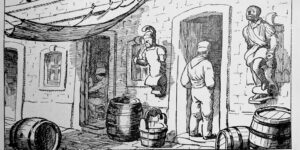
Oriol López Badell, European Observatory on Memories (EUROM) Cover image: Illustration of the misnamed Negre de la Riba at the pier, published in Visions barcelonines, 1760–1860. Els barris de la Ciutat by Francesc Curet and Lola Anglada, 1953. The misnamed Negre de la Riba was, for decades, one of Barcelona’s most popular figures. Its origins …
Akiko Tsuchiya and Aurélie Vialette (eds.) Albany: State University of New York Press, 2025. 320 pp. ISBN 9798855800845 (hardback) A review by Jo Labanyi, New York University As the editors of this volume note, Spain has been slow to recognize the human rights abuses, including slavery, resulting from its former empire, in part because of …
David González, European Observatory on Memories (EUROM) Marco (2024), directed by Aitor Arregi and Jon Garaño, is a drama that delves into the complex figure of Enric Marco Batlle (1921–2022), portrayed with great intensity by Eduard Fernández. For many years, Marco was regarded as a survivor of the Nazi camps—a false identity that he himself …
By David González, European Observatory on Memories (EUROM) “The Teacher Who Promised the Sea” is a Spanish-produced film directed by Patricia Font, starring Enric Auquer and Laia Costa in lead roles. This fictional feature is inspired by the true story of Antoni Benaiges, a Republican teacher from the Freinet pedagogical school, who was killed by …
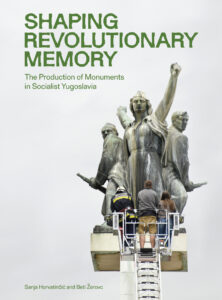
Book: Shaping Revolutionary Memory. The Production of Monuments in Socialist Yugoslavia. Sanja Horvatinčić and Beti Žerovc, 2023 (IZA Editions) Review by Daniel Palacios González, National University of Distance Education (UNED) Can a vast memory culture developed by thousands of people and interacting with millions over decades be fetishised and reduced to one word that strips …
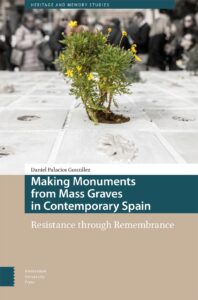
We never quite know what to do with memorials. Sometimes we debate whether to tear them down or not, or even consider turning them into outdated memory centres which have proven useless time and time again, beyond allowing the government of the day to draw a line under the matter.
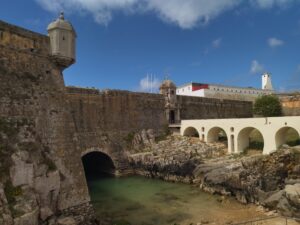
On 27 April 2024, the doors of the new national museum were opened. The President of the Portuguese Republic, Marcelo Rebelo de Sousa, presided over the official ceremony as part of the 50th-anniversary celebrations of the Carnation Revolution. Half a century after the prisoners were freed, the terrible Peniche Fortress has finally become an essential museum for understanding the longest dictatorship in Western Europe and celebrating the Portuguese people’s fight for freedom.
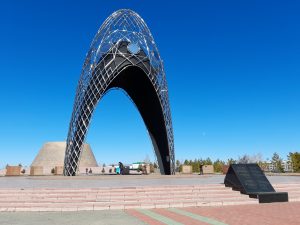
Marc DíazResearcher and educator in human rights at the University of Barcelona’s Solidarity Foundation Cover picture: Arch of Sorrow, Alzhir Museum-Memorial complex. Picture: Marc Díaz Planas There are currently four museums that specifically focus on political repression during Soviet times in Central Asia. One is in Uzbekistan and the other three are dotted around Kazakhstan. …
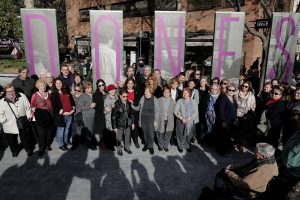
Ricard Conesa SánchezHistorian and project officer at the EUROM Cover picture: The Memorial Site of the Les Corts’ Women Prison was inaugurated in 2019, after years of work and vindication by the Platform Future Monument Presó de dones de les Corts. Barcelona City Council. On 14 December 2019, the monument dedicated to the now defunct …
Ricard Conesa SánchezHistorian and project officer at the EUROM “It ends up being an exhibition where you don’t really know if it is about history, art history or aesthetics. It does not come from any of these disciplines and it comes from all of them at the same time”. This is how Núria Ricart, a …