
Dietmar J. Wetzel, MSH Medical School, Hamburg & University of Basel
Cover image: Salvador Allende Square, Paris (7th Arrondissement), November 12, 2023, March against anti-Semitism. National Rally elected officials, Marine Le Pen and Jordan Bardella surrounded by journalists. Siren-Com, CC BY 4.0, via Wikimedia Commons.
1. Introduction – Memory in a fragmented Europe1
In an era of resurgent nationalism and democratic backsliding, the notion of shared European memory appears both essential and paradoxical. As I recently demonstrated (Wetzel 2025), European memory is not a monolithic entity, but rather a dynamic and layered cultural construct, shaped by diverse social actors and institutions. Against the backdrop of post-war integration, the fall of the Iron Curtain, and current geopolitical tensions, including the war in Ukraine and Brexit, Europe’s memory culture faces renewed fragmentation. Right-wing populist parties across Europe are using memory to mobilise support, reinforce exclusionary narratives, and challenge supranational institutions such as the European Union (EU).
European collective memory is deeply embedded in the politics of identity. It mediates between historical experiences, emotional investments, and normative orientations. Although the EU has sought to foster a shared memory rooted in anti-fascism and reconciliation, member states persist in emphasising their own national myths, heroes, and victimhood. This fragmentation challenges the vision of a cohesive European identity based on solidarity and dialogical remembrance (Assmann 2007).
2. Theoretical Foundations: From Halbwachs to the Assmanns
Maurice Halbwachs established the sociological basis of collective memory, proposing that memory is shaped by social factors and adapted to the requirements of contemporary groups (Wetzel 2023). He distinguished between autobiographical and collective memory, emphasising that individuals remember individually as members of social groups, such as families, religious communities or nations.
Memory is therefore neither fixed nor purely personal. Jan and Aleida Assmann expanded on this concept by introducing the distinction between communicative memory and cultural memory. The former is embedded in everyday social interaction and has a limited time span of three to four generations, while the latter is formalised, ritualised and stabilised across centuries through institutions, symbols and texts. Cultural memory shapes longterm identity and historical continuity.
Alongside these theoretical pillars, Nina Leonhard (2017) provides a useful typology for understanding memory in political contexts. “Politics of Memory Frameworks” (Gedächtnispolitik) refers to institutional structures that regulate public memory through archives, education systems, and legal norms. “Politics of Remembrance” (Erinnerungspolitik) concerns the symbolic and often contested political shaping of memory through commemorations, discourses, and public rituals. “Politics of the Past” (Vergangenheitspolitik) addresses the legal and institutional redress of historical injustices, including reparations, trials, and truth commissions. “Politics of History” (Geschichtspolitik) involves the strategic appropriation of history to serve contemporary ideological and political goals. Together, these concepts demonstrate that memory is a powerful and governance-related resource, intertwined with ideologies, institutions, and identity constructions.
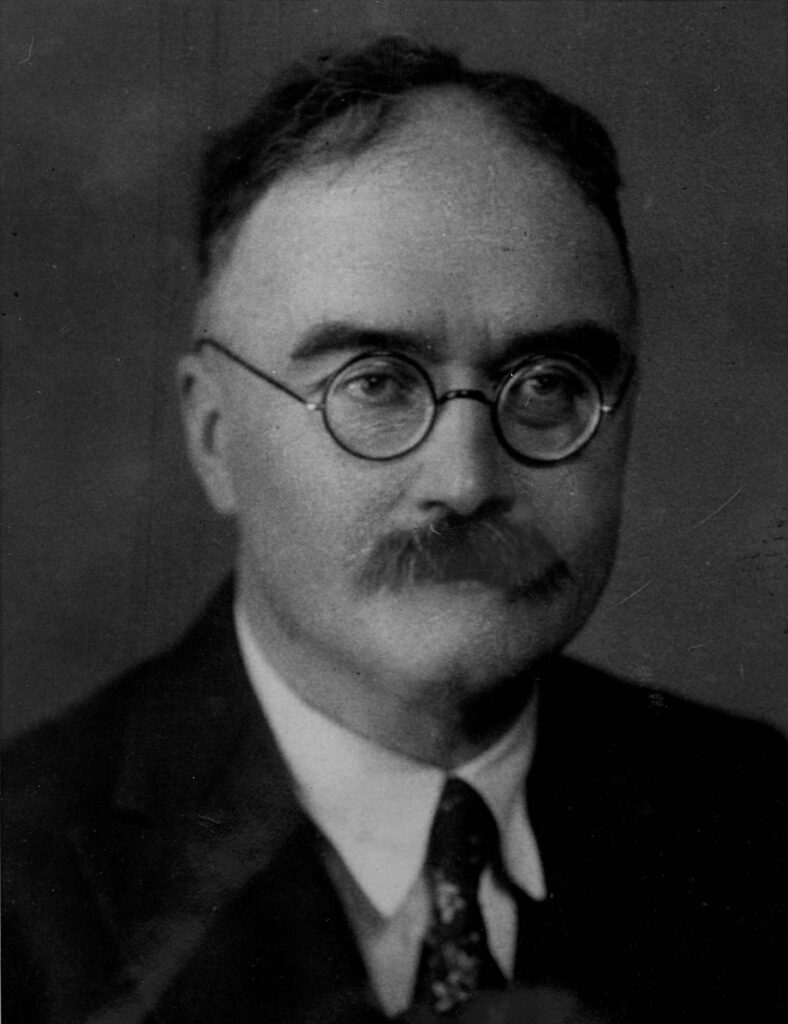
Portrait of Maurice Halbwachs. Medihal, CC0, via Wikimedia Commons
3. Functions of European Memory
Six interrelated functions of European memory can be identified, each of which contributes to the formation of identity, legitimacy and cohesion. (1) Spatial constitution: Memory shapes the symbolic geography of Europe, defining its borders and core values. Shared memories of the Holocaust, totalitarianism and war form the basis of European integration as a peace project. (2) Symbolic capital: Memory is a resource in political struggles over belonging and legitimacy. Competing actors use historical narratives to advance claims to identity, rights or exclusion. (3) Ideological contestation: Memory is a battleground where different interpretations of history support different political projects. While some narratives promote liberal cosmopolitanism, others legitimise nationalist retrenchment. (4) Heterogeneity management: Memory mediates between diverse national experiences. Europe’s history of wars, empires and resistance movements requires plural and contextsensitive memory politics. (5) Institutionalisation: The EU supports memory sites through programmes such as the European Heritage Label. Institutions such as museums, commemorations and school curricula play a pivotal role in embedding memory. (6) Normative paradigms: Post-WWII memory fosters a normative ethos of ‘‘Never again!’’ — rejection of war, fascism and genocide. While this serves as a moral anchor, historical revisionism increasingly challenges it and populist instrumentalisation (Wetzel 2025).
Among others, Aleida Assmann emphasised the importance of dialogical memory, which enables mutual recognition while respecting national specificities and building transnational connections. Only a dialogical approach can transform competing memories into a shared European narrative.
Structures of Memory: The Three-Level Model
In my recent contribution to the study of European collective memory, I propose a three-level model that offers a multi-scalar view of how collective memory operates.
Level One: Events and Evaluations – This foundational layer encompasses significant historical events, such as the two World Wars, the Holocaust, the legacy of colonialism, the Cold War and the establishment of the EU. These events serve as anchors for memory and identity.
Level Two: Manifestations and Institutionalisation – This layer comprises material expressions of memory, such as monuments, museums, commemorations and policy frameworks. These embed historical meaning in public spaces and institutional practices.
Level Three: Remembering communities: This includes the various actors involved in memory production, from families and generations to national governments and transnational NGOs. These communities interpret and contest historical narratives, shaping how memory is transmitted.
This model helps us understand the layered complexity of memory and its symbolic, institutional and agentic dimensions.
5. Post-Nationalism or Re-Nationalisation?
According to Jürgen Habermas, the concept of a “post-national constellation” emerged, in which the significance of national borders would be diminished in favour of global governance and the establishment of cosmopolitan democracy. Nevertheless, contemporary political developments indicate a re-nationalisation of memory and identity. From Brexit to the rise of authoritarian populism in Hungary and Poland, nationalist narratives observe the reclaiming of public space. Memory serves as a tool for the establishment of boundaries– between “us” and “them”, between the nation and the EU, and between insiders and outsiders. This shift is evident in the manner in which states commemorate history: national victories are emphasised, while shared traumas such as colonialism or the Holocaust are relativised or sidelined.
The concept of “imagined communities”, as proposed by Benedict Anderson, remains a seminal one in this field. Nations, according to this theory, are constructed through shared symbols, rituals and historical myths. In the context of re-nationalisation processes, memory is a dynamic entity actively reconstructed to validate prevailing ideologies and to marginalise dissenting voices. It can be argued that national identity is inextricably linked to exclusive memories. The argument is made that collective identities depend on a shared past that is inaccessible to external observers. In contemporary Europe, this exclusivity is a brake on the formation of a genuinely inclusive memory culture.
6. Case Study: Rassemblement National in France and Memory Politics
The French Rassemblement National (RN), formerly known as the Front National, offers a compelling example of how political actors can utilise collective memory for nationalist ends. It is evident that under the leadership of Marine Le Pen and, more recently, Jordan Bardella, the National Rally (RN) has pursued a strategy of “de-demonisation”, which
involves the normalisation of extremist ideas through the strategic utilisation of memory.
Europe as Symbol and Threat: The RN’s narrative differentiates between a cultural Europe, embodying Christian roots and Western civilisation, and the political structure of the EU, which is depicted as elitist, technocratic, and anti-national. This enables the RN to claim European legitimacy while rejecting EU authority (Loritimer, 2020). We can characterise this as an ambivalent Europeanism: Europe is regarded as a civilisational concept, but it is met with rejection as
a political entity. This enables the RN to weaponise European identity against immigrants, Muslims, and
the political left.
Jeanne d’Arc and the Myth of National Purity: A fundamental aspect of RN’s memory politics is the cult of Jeanne d’Arc. Depicted as a figure of purity, heroism and self-sacrifice, Jeanne ’d’Arc is mobilised as a symbol of French resistance to both foreign enemies and domestic betrayal. The annual homage paid by Le Pen to her in Orléans has been interpreted as a ritual of national purification. Pierre Nora (and his thinking of “Lieux de Mémoire”) advanced the argument that France has historically engaged in the sacralisation of its history, effectively transforming it into a form of civic religion. The RN draws upon this tradition, reviving mythical figures and events to construct a narrative of French
uniqueness, victimhood, and resilience (Soffer 2022).
A comparative analysis of the political ideologies of the National Front (FN) in France and Germany’s Alternative für Deutschland (AfD) reveals a shared commitment to challenging established European memory culture. Both parties engage in the rehabilitation of national myths and the minimisation of historical guilt, strategies that underscore their respective political agendas.
However, a divergence in strategy is evident between the two parties. While the Republican Party has sought to ameliorate its public image, Alternative for Germany continues to adopt a confrontational stance. As one can argue, both parties employ victimisation narratives, portraying the native population as imperilled by liberal elites and foreign
influences. This perspective positions the EU not as a peace initiative, but rather as a potential threat to national survival. Many critics have observed that the RN’s “normalisation” has enabled it to gain parliamentary strength, while the AfD faces institutional pushback. Nevertheless, both seek to establish a “counter-memory” that redefines history
in line with nationalist agendas.
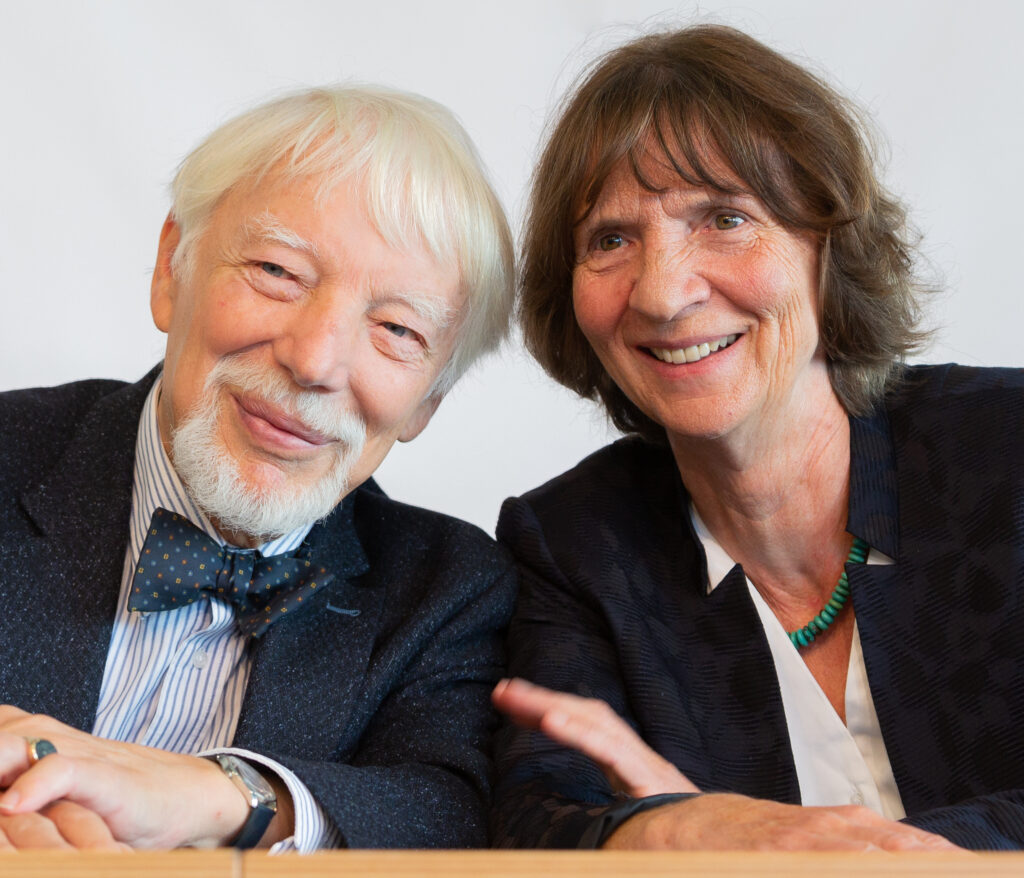
Jan and Aleida Assmann, the winners of the 2018 Peace Prize of the German Book Trade, at a press conference during the 2018 Frankfurt Book
7. Toward a Plural and Reflexive Memory Culture
The following five theses offer a conclusion of the current state and future prospects of European memory: 1. Memory is Processual – Memory must remain flexible and subject to renegotiation, avoiding canonisation or dogmatism. 2. National Memory Supersedes European Solidarity – The rise of nationalism undermines shared memory practices and transnational identities. 3. Populist Risk – If nationalist parties further consolidate power, memory cultures may be reshaped to support authoritarianism. 4. Utopian Potential – Despite its challenges, European memory can be a space of solidarity and dialogue if it embraces plurality. 5. Participatory Imperative – Citizens must actively shape memory cultures through education, civil society, and intercultural dialogue.
These theses emphasise the necessity of safeguarding democratic and pluralistic memory cultures against the threat of instrumentalisation and exclusion.
Conclusion: The European memory system currently finds itself at a critical juncture. As demonstrated in this essay, memory is not merely a passive reflection of the past, but an active process of identity construction, political legitimation and cultural negotiation. The notion of unified European memory is eroded by nationalist retrenchment, populist rhetoric, and fragmented historical narratives. However, the necessity for a shared, dialogical memory culture has never been more pressing. The politics of memory frameworks, remembrance, the past, and history demonstrate the profound interconnection between historical interpretation and power.
Whilst actors such as the Rassemblement National seek to manipulate memory to consolidate ethnonationalist ideologies, other initiatives –including academic, civic and institutional bodies – continue to advocate for inclusive, pluralistic approaches. Dialogical memory, as proposed by Aleida Assmann, provides a normative framework
that does not eliminate difference, but rather establishes a foundation for coexistence based on mutual recognition and respect.
In order to maintain democratic cohesion in Europe, it is imperative that memory is not ceded to nationalist factions. Instead, it must be reclaimed as a common good, embedded in critical education, public discourse, and institutional practice. European memory must remain flexible, open to plurality, and guided by the principles of justice, solidarity, and
historical responsibility. It is only in this manner that Europe’s past can serve as a foundation – rather than a battleground – for its future.
References
ASSMANN, A. (2007). Europe: A community of memory? GHI Bulletin, 40, 11–25.
LEONHARD, N. (2017). Integration und Gedächtnis: NVA-Offiziere im vereinigten Deutschland. Köln: Halem.
LORITIMER, M. (2020). Europe as ideological resource: The case of the Rassemblement National. London School of Economics. https://personal.lse. ac.uk/lorimer/documents/legitimacy_through_europe_preprint.pdf
SOFFER, D. (2022). The use of collective memory in the populist messaging of Marine Le Pen. Journal of European Studies, 52(1), 69–78.
WETZEL, D. J. (2023): “Contested Memories – Aspects of collective remembering and forgetting”. In: Perret, Noëlle-Laetitia und Schmidt, Hans-Joachim, Memories lost in the Middle Ages. Belgium: Brepols, 61–73.
- This contribution is based on my article “Das europäische Gedächtnis im Spannungsfeld national gerahmter Erinnerungsdiskurse”, in: Dimbath, Oliver und Gerd Sebald (2025), Vergangenheitsbezüge. Bilanz und Perspektiven sozialwissenschaftlicher Gedächtnisforschung. Wiesbaden: Springer VS, 291-312. ↩︎