
Francoist repression
and May’68 in Paris
Montse Clavé’s testimony connects her early political activism under Franco’s dictatorship in Spain with the student protests and social movements of May 1968 in Paris. Arrested at the age of 16 for her involvement in anti-Franco activities in Barcelona, her experiences offer a personal perspective on political repression, resistance and the struggle for freedom in twentieth-century Europe.
Early political awareness
Montse Clavé’s political awareness began at an early age, shaped by the environment in which she grew up and her brother’s involvement in left-wing movements. From the age of ten, she accompanied him to theatre performances in bars, community centres and shantytowns across Barcelona. The theatre group was politically committed, using its performances to engage with social issues and reach different communities.
Through these experiences, Montse became familiar with discussions about social struggle and political change. Although she was still a child, the people around her and their activities introduced her to a world of political activism that would shape her own path.
Arrest and imprisonment under Franco’s dictatorship
In the 1960s, labour and student movements increasingly challenged Franco’s dictatorship. The miners’ strikes in Asturias, particularly those of 1962 and 1968, became important moments of worker mobilisation. In Barcelona, university students organised demonstrations in solidarity with the miners, demanding democracy and expressing opposition to the regime.
Montse was among the students who took part in these demonstrations at the University of Barcelona. During one protest, the police surrounded the university, preventing students from leaving and arresting around 200 people, including Montse, who was just 16 years old.
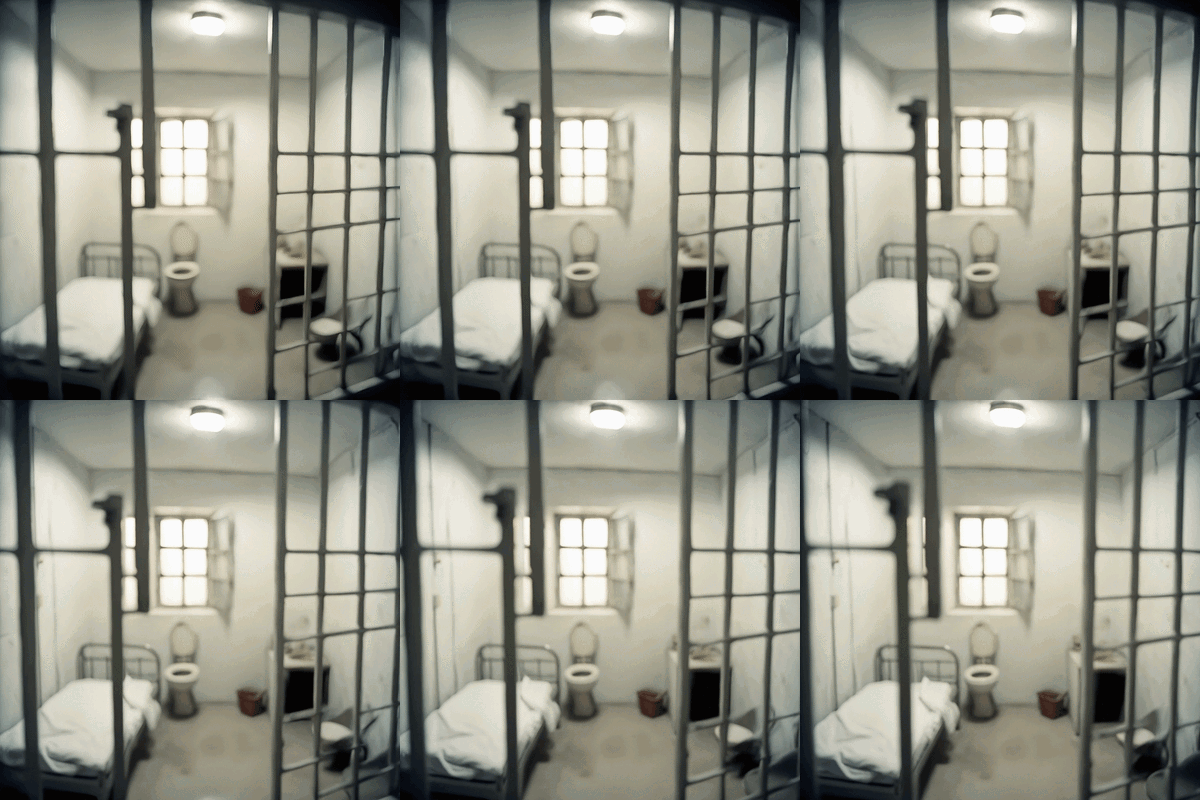
She was taken to the police headquarters on Via Laietana, where she spent hours waiting to be questioned. She recalls hearing the screams of other detainees being beaten and tortured. Although she was released from police custody after 78 hours, she was subsequently transferred to La Model prison, where she was held in isolation for six days. As a minor, she found herself alone in an adult prison, uncertain about what was happening and deeply distressed by the thought that her family did not know where she was.
Montse remembers her release particularly vividly. On a rainy day, she left the prison alone, without money or anyone waiting for her. After asking for a telephone token at a nearby café, she was able to contact her family. The kindness of the woman who lent her the token and offered her a warm coffee remains one of the most meaningful details of this experience.
May 1968: student protests and solidarity in Paris
Years later, Montse moved to Paris with her husband, who was pursuing his doctorate on a scholarship. She studied Fine Arts and found herself in the midst of the events of May 1968, when student protests developed into a wider social movement challenging established political and social structures in France.
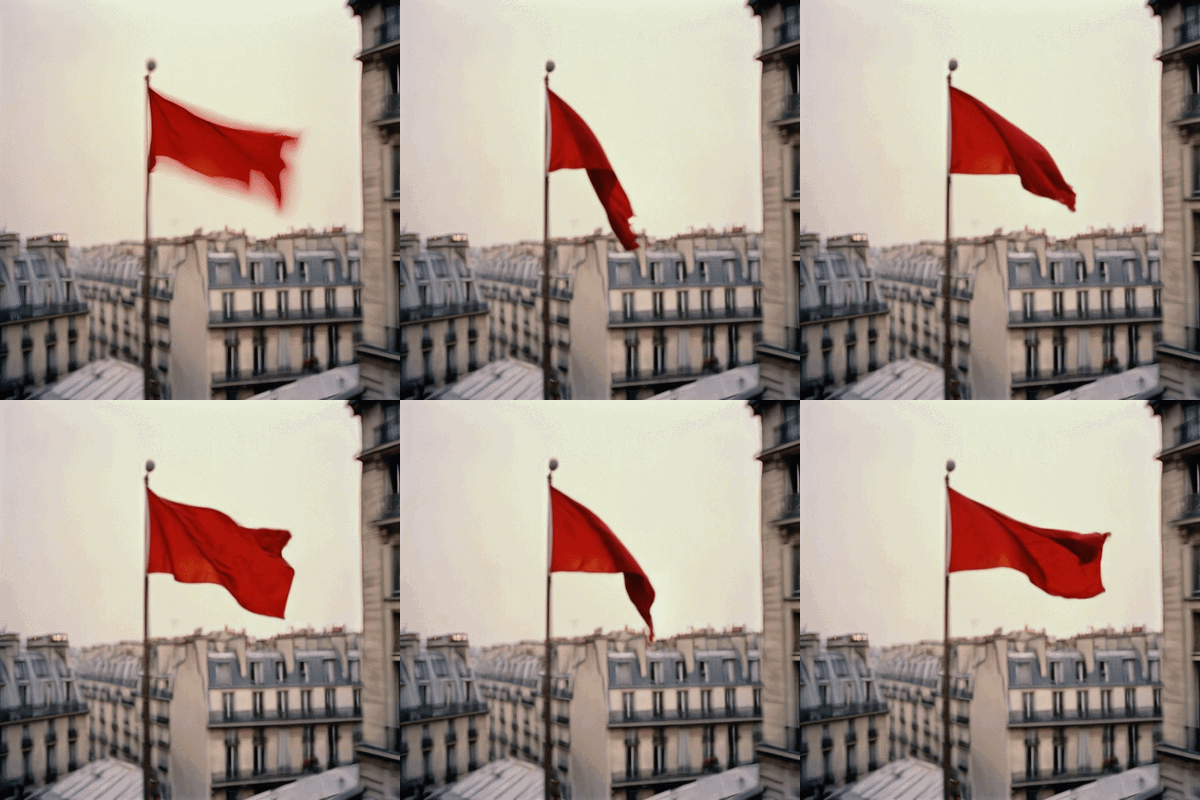
Montse recalls the police occupation of the Sorbonne and the student demonstrations that followed. As protests spread across Paris, students built barricades using paving stones, while workers joined the mobilisation and a general strike brought much of the city to a standstill. Cultural institutions and department stores were occupied, and red flags appeared across the city.
For Montse, May 1968 was an extraordinary experience of collective action and solidarity. She remembers spending entire days in the streets alongside young people from different backgrounds and countries. When the police surrounded demonstrators and fired tear gas, local residents offered them handkerchiefs soaked in lemon juice to protect their eyes. These gestures of solidarity left a lasting impression on her.
She also recalls the sense that they were changing the world. Although the movement was spontaneous and not primarily directed by political parties, she believes it helped strengthen causes such as feminism and ecology. Looking back, she describes May 1968 as a beautiful and revolutionary moment, one whose intensity was inseparable from its brevity.