
Anti-Franco resistance, regime repression and prison
Genoveva Munell’s testimony connects her personal experience of anti-Franco resistance, clandestine activism, political repression and imprisonment with the wider history of the final years of Franco’s dictatorship in Spain.
Her testimony has generated three Synthetic Memories, centred on her life as a clandestine militant, her experience of gendered repression at the Via Laietana police headquarters, and her imprisonment and resistance at Trinitat women’s prison.

Entering clandestine resistance
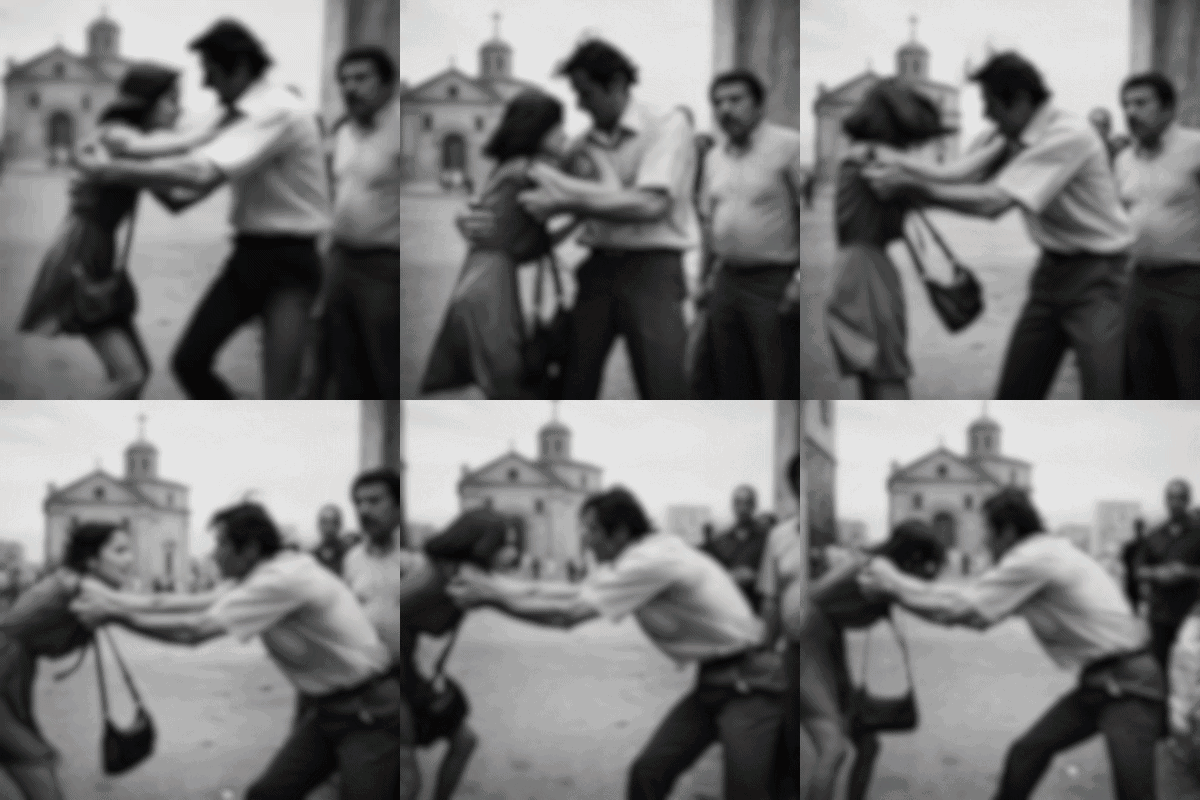
Genoveva grew up in a working-class family and began working at the age of 13. She later became involved in student and workers’ activism, in a period marked by growing opposition to the Franco regime. She joined the Partido Comunista Marxista-Leninista and began taking part in clandestine actions, distributing political leaflets and organising among workers.
After a failed attempt to distribute leaflets at a bus stop serving the SEAT factory, she was forced to go underground. The party provided her with false documentation, and she began living clandestinely, meeting political comrades through cells and constantly taking precautions to avoid surveillance.
Arrest and repression at Via Laietana
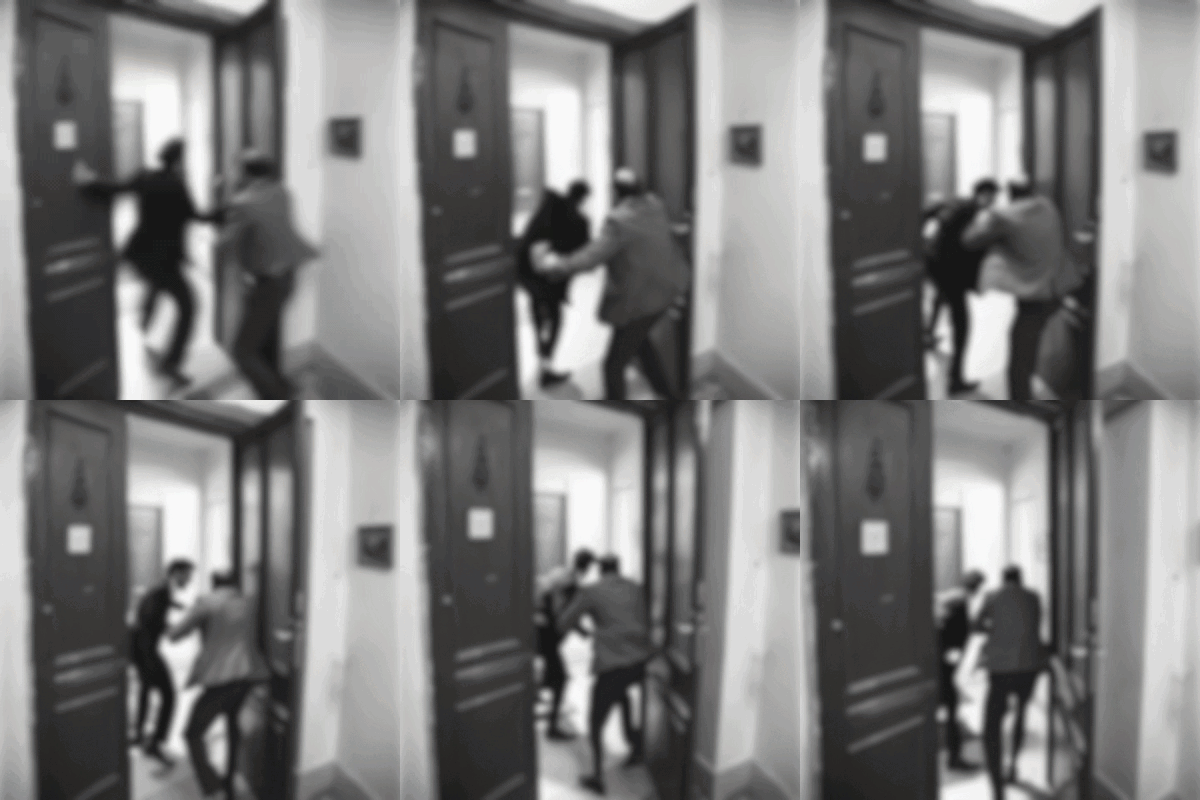
Around 1973, after a period of increasing arrests among opposition groups, Genoveva was detained at her home in Sant Adrià del Besòs and taken to the Via Laietana police headquarters in Barcelona. She spent ten days there under the anti-terrorism decree.
She recalls witnessing other detainees being brought back from the Model prison and subjected to torture. She also describes her own treatment, including a severe injury to her hand. Her testimony highlights the specifically gendered forms of humiliation she experienced: she was forced to leave the toilet door open while accompanied by a police officer, and when she menstruated, she was denied sanitary protection and subjected to insults and humiliation.
Trinitat prison and the death of Franco
Genoveva was later transferred to Trinitat women’s prison, where she found herself among other women prisoners. The presence of her fellow inmates offered a sense of protection after the isolation and violence of police detention. She recalls the strict conditions imposed by the nuns who ran the prison, as well as censorship of communications with families.
The women organised demonstrations demanding the departure of the nuns and the abolition of legislation that punished aspects of women’s lives, including leaving the family home and abortion. Genoveva was still in prison when Franco died on November 20, 1975. The prisoners celebrated quietly, raising a toast with water, and then began a hunger strike that lasted up to ten days.
Remembering resistance
Genoveva’s story moves from political awakening to clandestine resistance, police repression and imprisonment. Her memories offer a personal perspective on the final years of the Franco dictatorship, while also revealing the particular experiences of women who opposed the regime.